Winter in Boulder has a way of catching homeowners off guard.
One afternoon, the sun is shining over the Flatirons, and the temperature feels comfortable enough to enjoy a walk outside. A few days later, a cold front can bring freezing temperatures, snow-covered sidewalks, and unexpected maintenance problems.
For homeowners, those changing conditions mean winter preparation involves more than keeping a snow shovel in the garage.
Frozen pipes, damaged irrigation systems, heating failures, roof leaks, and poorly maintained walkways can all create expensive problems. And in 2026, Boulder homeowners have another consideration: unusually dry conditions that make water conservation and winter tree care particularly important.
On October 20, 2026, Boulder County water providers encouraged residents to continue conserving water as the region heads into fall and winter.
The good news? Many winter-related problems can be reduced through preventive maintenance.
Whether you own a historic home near downtown Boulder, a single-family property in North Boulder, a townhome, or a foothills residence, these nine steps can help you prepare your property for the colder months ahead.
1. Protect Your Plumbing Before Temperatures Drop Below Freezing
Frozen pipes are among the most disruptive winter problems a homeowner can experience.
Water expands when it freezes. If that expansion creates enough pressure inside a pipe, the pipe can rupture, potentially causing significant water damage when the ice thaws.
According to the City of Boulder's frozen-pipe prevention guidance, vulnerable locations include outdoor faucets, sprinkler supply lines, garages, crawl spaces, attics, and pipes running along poorly insulated exterior walls.
Older houses and remodeled properties may have plumbing configurations that deserve additional attention.
What Boulder homeowners should do:
Before freezing weather arrives, disconnect outdoor hoses, drain them, and store them indoors.
If your home has interior shutoff valves for outdoor faucets, close those valves and drain the exterior lines as appropriate.
Inspect exposed plumbing in unheated spaces and consider adding suitable pipe insulation. Pay particular attention to areas where cold outdoor air can reach water supply lines.
Locate your home's main water shutoff valve. Make sure household members know how to access it and recognize when it needs to be used.
During extreme cold, keep garage doors closed when water lines are present. Opening kitchen or bathroom cabinet doors can help warmer indoor air circulate around vulnerable plumbing, provided cleaners and other hazards remain inaccessible to children and pets.
If you plan to leave your home during freezing weather, the city recommends keeping the thermostat at 55°F or higher. Homes with unusually exposed plumbing may require additional precautions.
Boulder also advises allowing a minimal faucet drip during severe cold when exposed pipes are at risk. That should be a targeted precaution, not a substitute for repairing or insulating vulnerable plumbing, particularly while water conservation remains important.
What if a pipe has already frozen?
If a faucet suddenly produces little or no water during a freeze, a frozen supply line may be responsible.
Avoid open flames or improvised high-heat equipment. If you cannot safely identify and access the affected pipe, contact a licensed plumber.
If a pipe has burst, shut off the water when safe to do so and obtain professional assistance immediately.
The homeowner takeaway: A relatively small investment in insulation and preventive maintenance can help avoid an emergency plumbing repair.
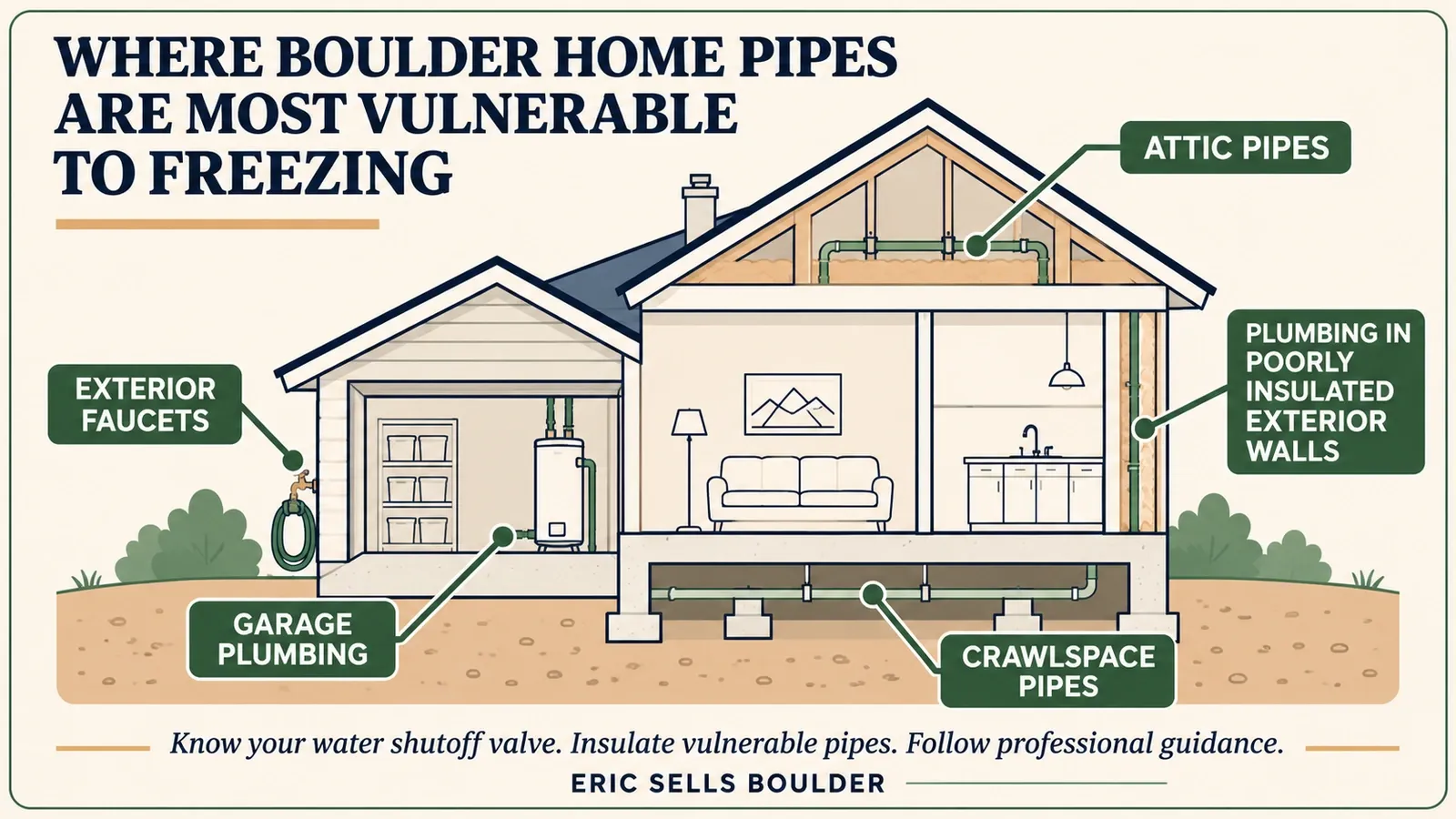
Plumbing in garages, crawl spaces, attics, and exterior walls may need additional freeze protection.
2. Winterize Your Sprinkler System and Outdoor Water Connections
An irrigation system that performs perfectly throughout the summer can become a source of expensive repairs during winter.
Even when sprinkler heads are not actively operating, water may remain inside underground pipes, valves, pumps, or backflow prevention equipment.
When temperatures fall below freezing, trapped water can expand and damage those components.
Colorado State University Extension recommends properly removing water from irrigation systems before winter, noting that inadequate winterization can result in broken pipes, cracked valves, and other damaged equipment.
For many residential systems, that involves a professionally performed compressed-air blowout.
This is not necessarily a do-it-yourself project. Incorrect air pressure or improper treatment of backflow prevention equipment can cause damage or injury.
Homeowners should confirm that the work has been completed correctly rather than assuming that turning off the irrigation controller is sufficient.
What about your outdoor faucets?
Sprinkler winterization and outdoor faucet protection are related but separate responsibilities.
A properly winterized irrigation system does not automatically mean every hose bib, exterior sink, or outdoor water connection is protected.
Check these individually.
For properties with outdoor kitchens, irrigation pumps, decorative water features, or other specialized equipment, follow the manufacturer's winterization instructions or consult a qualified contractor.
The homeowner takeaway: Confirm that both your irrigation system and other outdoor water connections have been prepared before prolonged freezing conditions arrive.
3. Service Your Heating System and Check Carbon Monoxide Safety
Your home's heating system becomes especially important when outdoor temperatures drop.
A furnace or heat pump that has been operating inconsistently during the fall may have a more difficult time keeping the home comfortable during an extended cold spell.
Preventive maintenance can help identify problems before heating equipment becomes an emergency concern.
Start by checking your heating system's filter and replacing or cleaning it according to the manufacturer's specifications.
Dirty filters can restrict airflow, increase system strain, and reduce efficiency.
Schedule professional maintenance when appropriate for your system. A qualified technician can inspect components, evaluate performance, and identify safety or repair concerns.
Homes with fireplaces, wood stoves, or fuel-burning heating appliances may also require chimney, venting, or combustion-system inspections.
Don't overlook carbon monoxide
Carbon monoxide is an odorless, colorless gas that can be produced by malfunctioning or improperly operated fuel-burning equipment.
Make sure carbon monoxide alarms are installed in appropriate locations and functioning properly. Follow applicable local requirements and the alarm manufacturer's instructions.
The U.S. Fire Administration also recommends keeping combustible materials at least three feet away from heating equipment and having heating equipment and chimneys inspected and maintained by qualified professionals.
Never use an oven, outdoor grill, or camping stove to heat your home.
If a carbon monoxide alarm sounds, move everyone outside to fresh air and contact emergency services. Do not reenter until emergency personnel indicate that it is safe.
The homeowner takeaway: Heating maintenance is about more than comfort. It is an important part of household safety.
4. Inspect Your Roof, Gutters, and Drainage Before Snow Accumulates
A roof that appears to be in good condition during summer may reveal problems after several rounds of snow, melting, and refreezing.
Potential trouble spots include damaged shingles, deteriorated flashing, blocked gutters, loose downspouts, and existing drainage deficiencies.
When gutters are obstructed by leaves or debris, melting snow may not drain properly.
Water can back up, overflow near the foundation, or contribute to ice buildup in vulnerable roof areas.
Boulder homes surrounded by mature trees may need particular attention to seasonal leaf and debris accumulation.
What should you inspect?
From a safe location, look for visible roofing damage, loose gutters, disconnected downspouts, and areas where water appears to collect near the house.
Check whether downspouts direct runoff away from the foundation and whether drainage routes are obstructed.
Inside the home, watch for ceiling stains, damp attic materials, or other evidence of water intrusion.
These observations do not replace a professional roof inspection. Homeowners should avoid walking on icy roofs or using unstable ladders.
If you notice recurring ice buildup or signs of moisture, have a qualified contractor investigate the underlying cause rather than repeatedly treating the symptoms.
For homeowners buying a property, roof condition is also an important due-diligence consideration.
Eric Sells Boulder's guide to radon, sewer scopes, roofs, drainage, and older electrical systems explains why these components deserve closer attention during a Boulder home purchase.
The homeowner takeaway: Proper drainage is important year-round, but freezing conditions can make existing problems more difficult and expensive to address.
5. Understand Boulder's 24-Hour Sidewalk Snow Removal Rule
This is one of the most important local requirements for Boulder homeowners to understand.
Within the City of Boulder, property owners, landlords, and tenants are required to remove snow and ice from sidewalks and applicable roadside paths adjacent to their properties.
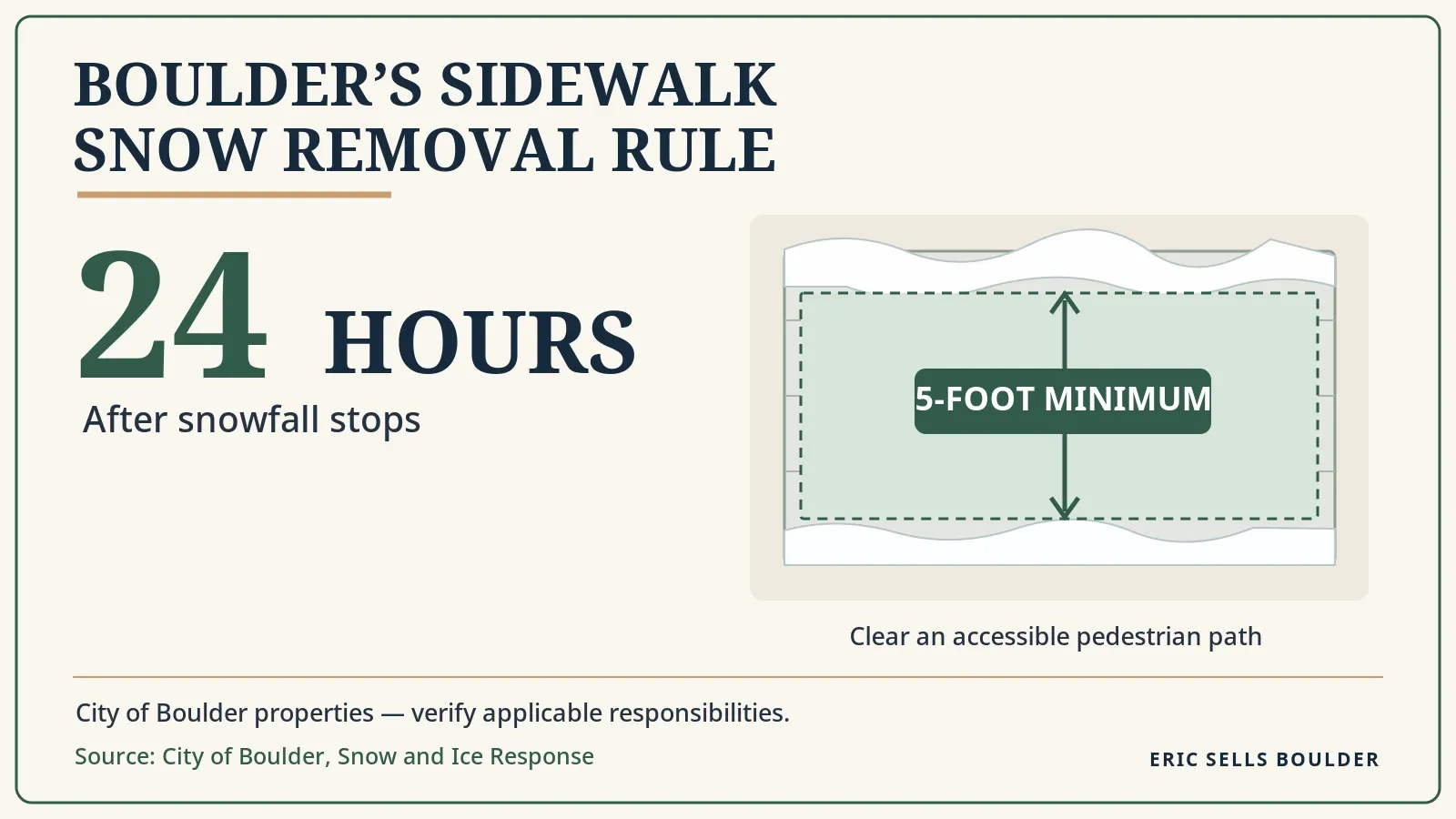
Under Boulder Revised Code Section 8-2-13, snow and ice must generally be cleared within 24 hours after snowfall stops.
The city specifies a minimum cleared width of five feet for applicable sidewalks and paths.
Failure to comply may result in enforcement costs, including fines and charges associated with private snow removal services.
Why does this matter?
Sidewalk clearing helps preserve safe access for pedestrians, people using mobility devices, children traveling to school, and residents accessing neighborhood services.
And although Boulder maintains a municipal snow response program, homeowners should not assume that city crews will clear the sidewalks in front of their houses.
The city also prioritizes certain roads and transportation corridors. Many residential streets are not routinely plowed.
What should homeowners do before the first major snowfall?
Keep a reliable snow shovel or appropriate snow-removal equipment accessible.
Identify which sidewalks, curb ramps, and pathways fall within your maintenance responsibilities.
If you travel frequently, arrange for someone to clear snow while you are away.
Homeowners in managed communities should review the HOA's maintenance obligations, while landlords and tenants should clarify responsibilities under their leases and applicable rules.
Avoid pushing snow into streets, blocking drainage areas, or creating new hazards for pedestrians.
Important: This specific municipal requirement applies within Boulder city limits. Properties elsewhere in Boulder County may be governed by different local rules.
The homeowner takeaway: Knowing who is responsible for clearing snow—and arranging help in advance—can prevent both safety problems and avoidable compliance issues.
6. Protect Your Trees and Landscaping During Boulder's Dry Winter Conditions
Winter maintenance in Boulder is not always about dealing with too much snow.
Sometimes, the greater challenge is insufficient moisture.
As of November 3, 2026, the City of Boulder remained under a Drought Watch, with residents encouraged to conserve water and adjust their landscaping practices.
The city's October 2026 guidance recommends reducing or shutting off lawn irrigation while continuing to protect trees and shrubs that may need supplemental moisture.
This is an important distinction.
Established lawns can often remain dormant through the colder months, but young trees, newly planted shrubs, and some evergreens may be more vulnerable to prolonged dry conditions.
Should you water trees during winter?
Potentially, yes—but only when conditions are appropriate.
According to the City of Boulder's tree care guidance, winter watering may be beneficial during dry periods when temperatures are above approximately 40°F and the ground is not frozen.
The city recommends checking soil conditions and generally considering winter watering about once per month when needed.
Avoid watering frozen ground, and do not add unnecessary water when rain or snow has already provided adequate moisture.
Use controlled methods such as hand watering or a soaker hose rather than reactivating your entire automatic irrigation system.
Applying mulch around the root zone can also help conserve moisture, provided mulch is kept away from direct contact with the trunk.
Why this matters for Boulder properties
Trees do more than improve a property's appearance.
Healthy landscaping can provide shade, visual character, and more comfortable outdoor spaces.
On established Boulder lots, mature trees may be among the property's most distinctive landscape features.
Protecting them through dry conditions is an investment in the long-term health of the property.
The homeowner takeaway: Winterize your irrigation system, but don't automatically forget about your trees until spring.
7. Seal Drafts and Improve Your Home's Energy Efficiency
Not every winter improvement requires replacing windows or installing a new heating system.
Some of the most practical upgrades begin by identifying where warm air escapes.
Common problem areas include exterior doors, window frames, attic access points, penetrations around plumbing and wiring, and poorly insulated spaces.
Air leakage can increase heating demand and make rooms uncomfortable even when the thermostat is functioning normally.
The U.S. Department of Energy identifies weatherstripping, caulking, and insulation as common ways to improve a home's energy performance.
Start with simple checks
On a cold day, pay attention to rooms that consistently feel drafty.
Look for worn weatherstripping around exterior doors and visible gaps around window frames.
Check that attic hatches close properly and that accessible insulation has not been displaced or damaged.
Use appropriate materials for each application, especially near electrical components, chimneys, and fuel-burning equipment.
For larger concerns, consider a professional home energy assessment before investing in major upgrades.
Boulder homeowners can explore the City of Boulder's energy rebates and resources, including EnergySmart, which helps Boulder County residents evaluate energy-efficiency improvements and available programs.
Rebate eligibility, available funding, and program requirements can change, so verify the current details before beginning a project.
What about older Boulder homes?
Older homes can have architectural charm and desirable locations while also presenting opportunities for improved insulation, air sealing, or mechanical efficiency.
However, improvements should be evaluated based on the specific building rather than its construction year alone.
A professional assessment can help distinguish inexpensive weatherization work from larger projects requiring permits or specialized expertise.
The homeowner takeaway: Start by identifying where your home loses heat before assuming that an expensive replacement project is necessary.
8. Prepare Exterior Walkways, Entryways, and Drainage Areas
Winter hazards are not limited to roofs and pipes.
Entry steps, driveways, decks, and outdoor walkways can become slippery after snow melts and refreezes.
Water that accumulates in shaded areas may remain frozen even when other parts of the property have thawed.
Before winter weather intensifies, inspect exterior surfaces for uneven pavement, poor drainage, damaged steps, or other conditions that could create hazards.
Make sure handrails are secure and outdoor lighting is working.
Consider adding suitable traction materials or improving drainage where ice repeatedly forms.
Deicing products should be selected and used carefully. Excessive application can affect nearby vegetation, building materials, and local waterways.
The City of Boulder encourages residents to minimize unnecessary deicer use because melting snow can carry pollutants into storm drains.
Think about how people actually use your property
Where do residents enter and leave the home during winter?
Is there a shaded walkway that tends to remain icy?
Does snow slide from a roof onto a frequently used path?
Can delivery workers or visitors reach the front entrance safely?
These practical questions often reveal maintenance priorities that are easy to overlook during warmer weather.
The homeowner takeaway: A well-maintained winter entryway improves everyday usability and reduces avoidable hazards.
9. Review Your Insurance, Emergency Supplies, and Home Maintenance Records
Even a well-maintained home can experience winter damage.
Severe weather, equipment failure, fallen branches, or water intrusion may create unexpected situations.
Preparation should therefore include a practical emergency plan.
Start by reviewing your homeowners insurance coverage, deductibles, exclusions, and claim procedures.
Do not assume that every type of freezing, water, flood, or weather-related damage is covered. Coverage depends on policy language and the circumstances of the loss.
Ask your insurer about any specific maintenance requirements or coverage conditions that may apply while a property is vacant.
Create a simple winter emergency plan
Make sure household members know where to find important utility shutoffs.
Keep emergency lighting, basic supplies, and necessary contact information accessible.
Know how to reach a plumber, HVAC contractor, electrician, or other qualified service provider when needed.
Have a safe plan for power outages. Fuel-powered generators should only be used outdoors with proper separation from openings, following manufacturer and public-health safety guidance.
It can also help to maintain a record of recent home improvements, equipment servicing, roof inspections, irrigation winterization, and major repairs.
These records may be useful when troubleshooting maintenance issues, discussing coverage with an insurer, or eventually preparing to sell the property.
The homeowner takeaway: Good preparation includes knowing what to do when something goes wrong—not simply trying to prevent every possible problem.
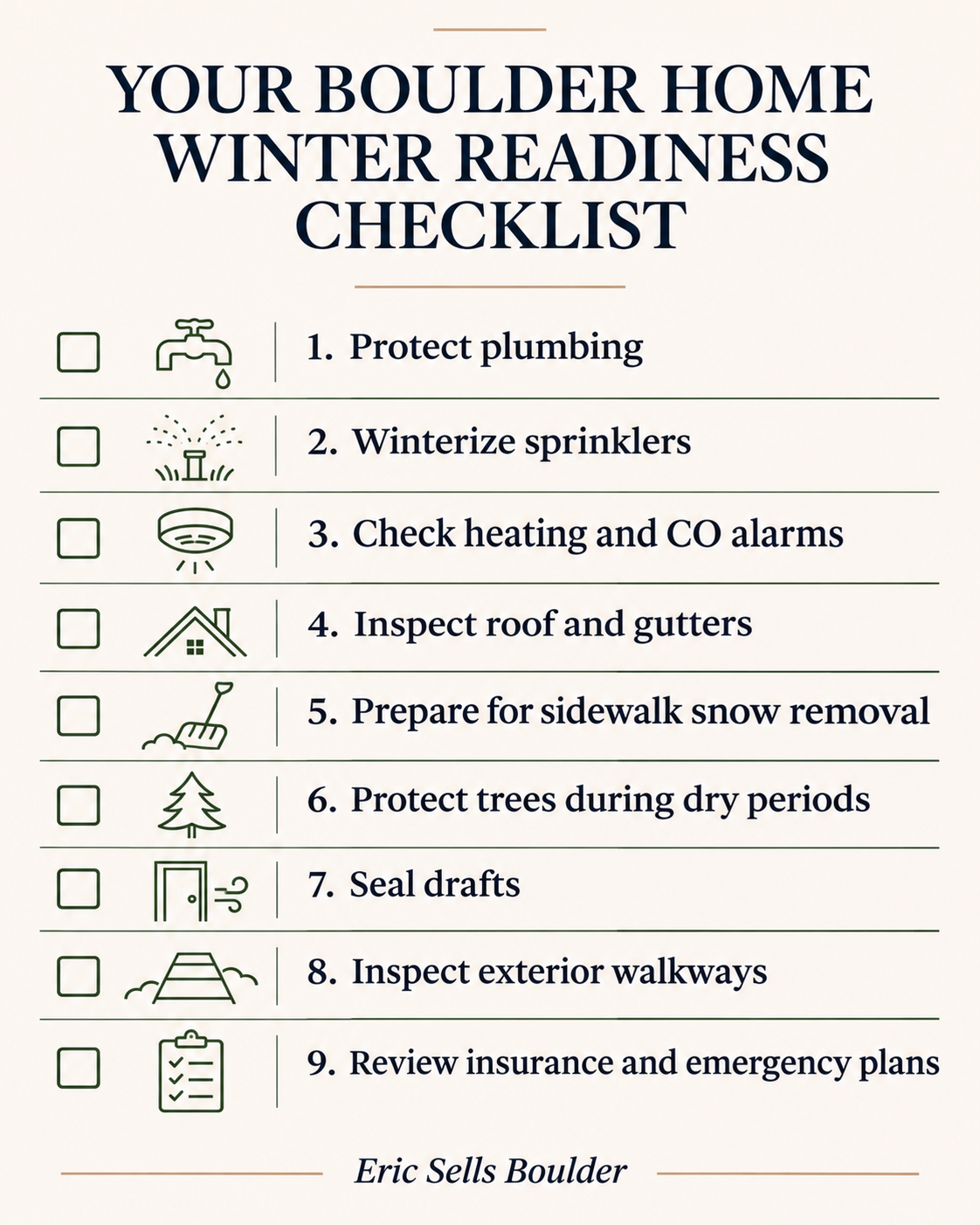
Your Boulder Winter Home Maintenance Checklist
Use this checklist before the next major freeze:
☐ Disconnect garden hoses and protect exposed plumbing.
☐ Locate and test access to the main water shutoff valve.
☐ Winterize the irrigation system and backflow equipment.
☐ Check the heating system and replace dirty filters as needed.
☐ Test smoke and carbon monoxide alarms.
☐ Inspect roofs, gutters, downspouts, and visible drainage areas.
☐ Prepare to clear adjacent sidewalks within the city's required timeframe.
☐ Check trees and shrubs for supplemental watering needs during dry periods.
☐ Inspect weatherstripping, insulation, and obvious drafts.
☐ Prepare walkways, entry steps, and outdoor lighting.
☐ Review insurance coverage and emergency contacts.
☐ Organize important maintenance and repair records.
Thinking About Selling Your Boulder Home This Winter?
If you're considering listing your Boulder property during the winter months, preparation can serve an additional purpose.
Buyers are evaluating not only how a home looks but also how well its systems and exterior features have been maintained.
A clean, accessible entryway, functioning heating system, organized maintenance records, and evidence of appropriate winterization can help make a property easier to evaluate.
For sellers, one of the best starting points is identifying deferred maintenance before the home reaches the market.
That does not mean every potential improvement will generate a positive return on investment.
Replacing a functional system solely to improve marketing appeal may not make financial sense. The value of repairs and upgrades depends on property condition, price positioning, buyer expectations, and local competition.
A property-specific review can help establish priorities.
For additional context, see Eric Sells Boulder's Boulder home inspection checklist, which covers common due-diligence considerations that buyers may investigate.
Homeowners planning to sell should also understand the carrying costs associated with maintaining their property. Eric's guide to the true monthly cost of owning a home in Boulder explains expenses that extend beyond the mortgage payment.
Should You Wait Until Spring to Sell?
Not necessarily.
The appropriate listing timeline depends on your goals, the property's condition, competing inventory, pricing, and your ability to prepare the home for market.
Winter sales may involve different practical considerations, such as photography, showing access, landscaping presentation, and weather-related inspection questions.
Rather than choosing a season based on broad assumptions, evaluate the current Boulder real estate market and the property's specific competitive position.
Frequently Asked Questions About Winter Home Maintenance in Boulder
How cold does it need to get for pipes to freeze?
Water freezes at approximately 32°F, but the risk to household plumbing depends on exposure, insulation, wind, the duration of cold weather, and indoor conditions.
Pipes in exterior walls, garages, crawl spaces, and other unheated locations deserve particular attention during prolonged freezing weather.
How long do Boulder homeowners have to shovel their sidewalks?
Within Boulder city limits, applicable sidewalks and roadside paths adjacent to properties generally must be cleared within 24 hours after snowfall stops.
Property owners, landlords, and tenants should review the city's current snow and ice removal requirements and determine who is responsible for completing the work.
Should I water my trees during the winter in Boulder?
During prolonged dry periods, supplemental watering may be beneficial, particularly for young trees and evergreens.
The City of Boulder recommends watering only when conditions are suitable, generally above 40°F with unfrozen ground, while accounting for natural precipitation.
Do I need to winterize my sprinkler system every year?
If an irrigation system contains water that can freeze, proper seasonal winterization is an important preventive measure.
The appropriate procedure depends on the system's design and components. A qualified irrigation professional can determine the proper method.
Is winter a bad time to sell a home in Boulder?
Not automatically.
A winter sale may be appropriate depending on inventory, buyer demand, property condition, pricing, and personal timing.
A property-specific market analysis is more useful than assuming every homeowner should wait until spring.
Final Thoughts: A Little Preparation Can Make a Big Difference
Boulder homeowners experience a distinctive combination of sunny winter days, sudden cold fronts, snowstorms, and sometimes extended dry periods.
That combination makes preventive maintenance especially important.
Preparing a home for winter does not require completing every possible improvement at once.
Start with the highest-priority issues: vulnerable plumbing, heating safety, irrigation winterization, roof and drainage conditions, and local snow removal responsibilities.
Then address energy efficiency, landscaping needs, outdoor safety, and emergency readiness.
For homeowners considering a move, understanding the property's condition is also an important part of planning a successful sale.
Thinking about buying or selling a home in Boulder, Colorado?
Eric Farran of Eric Sells Boulder can help you evaluate your property's position in the local market, understand buyer expectations, and develop a practical strategy for your next move.
Whether you're preparing a home for sale or searching for your next Boulder property, visit EricSellsBoulder.com to get started.
Editor's note: Information reflects sources reviewed for the November 3, 2026 editorial edition. Municipal rules, drought conditions, rebate programs, and property-specific responsibilities can change. This article provides general homeowner information and is not a substitute for professional plumbing, electrical, HVAC, roofing, insurance, or legal advice. City of Boulder regulations should not automatically be assumed to apply throughout unincorporated Boulder County.
FROM OUR BLOG

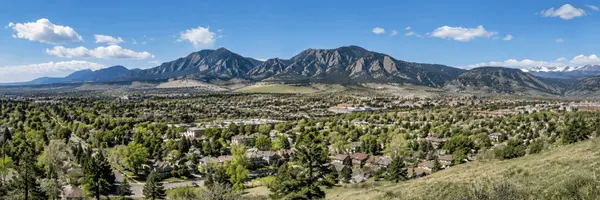
How Much Does It Cost to Sell a House in Boulder in 2026? Closing Costs Explained
Selling a home in Boulder can involve a substantial amount of money, but the final sale price isn't necessarily the amount that ends up in your bank account. Between brokerage compensation, title insurance, closing charges, property-tax adjustments, mortgage payoff, and possible buyer concessions, s
Boulder Property Taxes 2026–2027: Why Your Bill Changed and What Homeowners Should Expect
If you own a home in Boulder County, you may have noticed that your property tax bill looked different in 2026. You may have seen two assessed values instead of one, encountered an unexpected increase, or wondered why your taxes changed even though your property's assessed market value barely moved.
Boulder Rental License Requirements 2026: Fees, Inspections & How to Apply
Renting out a home in Boulder involves more than finding a tenant, setting a monthly rent, and signing a lease. Before most residential properties inside Boulder city limits can legally be advertised or rented, the owner must obtain a rental housing license from the City of Boulder. That requirement