One hundred and fifty years ago, a single red-brick building stood at the base of the Flatirons, a modest promise that Boulder would become something extraordinary. That building was Old Main. The university it housed was the University of Colorado Boulder, and in 2026, CU Boulder is marking 150 years of transforming lives, shaping Colorado, and putting this city on the world's map in ways its founders could never have imagined.
For those of us who live here, work here, or chose Boulder as home because of the energy this university generates, the sesquicentennial isn't just a campus occasion. It's a citywide moment — and it's worth understanding what CU Boulder actually means to this community, and why a milestone like this matters well beyond the graduation lawn.
From One Building to a World-Class University
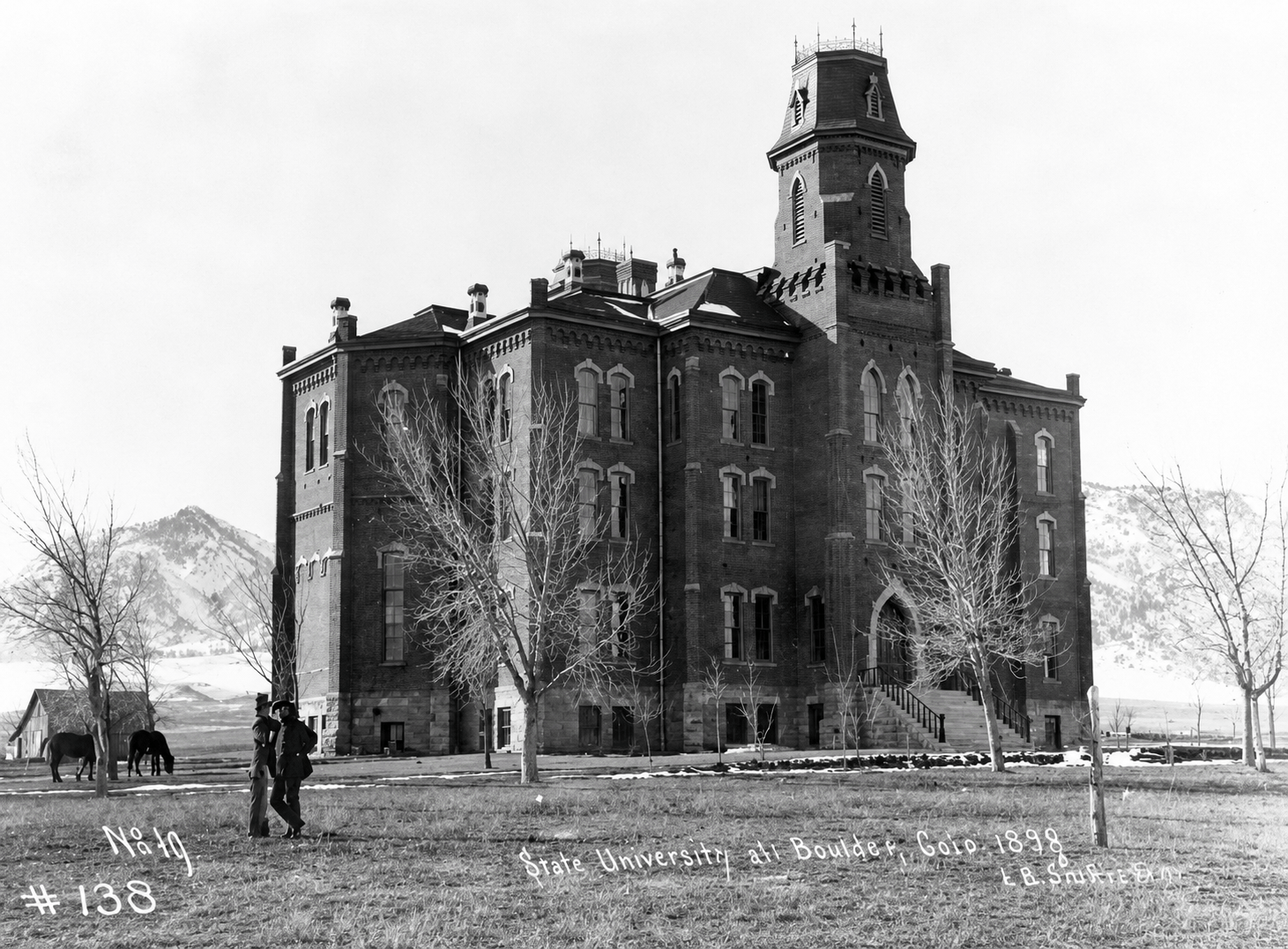
When construction began on Old Main in 1876 — the same year Colorado became a state — the entire University of Colorado Boulder fit inside a single Gothic Revival structure. It housed the president's family, the library, every classroom, and the janitor. Boulder's population at the time was fewer than 350 people. The university opened to students the following year, in September 1877, with a freshmen class so small the building felt cavernous.
Today, CU Boulder enrolls more than 37,000 students, employs over 4,000 faculty and staff, and operates as one of the most research-intensive public universities in the country. It has produced 15 Nobel laureates and is home to five NASA research centers — more than any other university in the nation. The Flatirons are still there. Old Main is still there too, freshly restored after a $14.3 million renovation completed in 2025, its sandstone and brick facade as sharp as it's looked in generations.
That continuity — the oldest building on campus standing in dialogue with some of the most advanced research facilities in the world — says something true about Boulder itself. This is a city that honors its roots while building something new on top of them.
A Yearlong Celebration That Belongs to the Whole City
CU Boulder's 150th celebration isn't a single event — it's a yearlong series of programming that opened to the public in early 2026 and runs through a documentary film premiere scheduled for January 2027. The sesquicentennial formally kicked off at the Conference on World Affairs in April 2026, which has brought global leaders and thinkers to Boulder's campus every year since 1948. Special anniversary panels featured former chancellors and presidents discussing how university leadership has evolved across eras, and programming explored CU Boulder's role in space exploration, democracy, and its land-grant origins.
Through the rest of 2026, standout events include the Sesquicentennial Faculty Scholars program — two public evenings, one in Denver on August 27 and one in Boulder on November 19, where CU faculty present research that directly benefits communities and addresses real-world challenges. These aren't academic lectures for insiders. They're designed to be compelling, story-driven, and open to anyone.
And running beneath all of it: a commitment to honest storytelling. The university has been explicit that this anniversary isn't just a highlight reel. It includes centering missing histories, correcting narratives that need to be told differently, and connecting CU Boulder's 150 years to the full complexity of Boulder's and Colorado's story.
The Research Legacy That Puts Boulder on the World Stage
It's easy to think of CU Boulder as Boulder's university. The truth is bigger than that. CU Boulder's research enterprise is one of the primary reasons Boulder has the economy, the talent base, and the national profile it does — and that directly shapes the real estate market, the job market, and the quality of life for everyone who lives here.
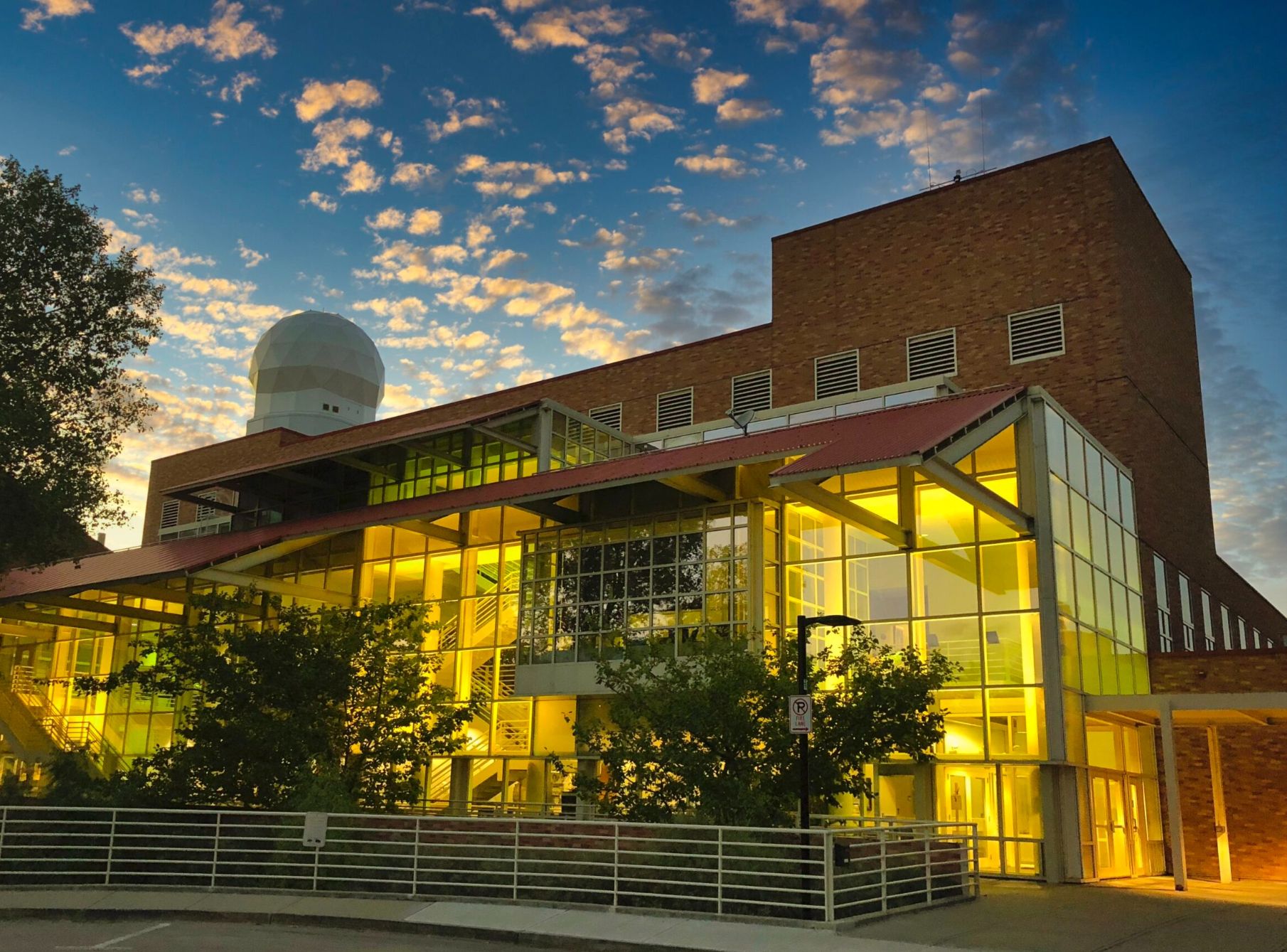
The university's research centers have contributed to GPS technology, climate science, quantum computing, aerospace innovation, and drug development. JILA — a joint institute between CU Boulder and the National Institute of Standards and Technology — has produced multiple Nobel laureates in physics working out of a building on campus. The Laboratory for Atmospheric and Space Physics (LASP) is the only university-based research institute to have sent instruments to every planet in our solar system.
For Boulder real estate specifically, the ripple effects are significant. University research activity draws high-wage professionals, visiting scholars, and graduate students who rent and buy in Boulder's neighborhoods. It anchors startup activity — Boulder's tech and biotech ecosystem is deeply connected to CU — and it's a primary driver of the city's above-average household income profile. When people ask why Boulder real estate holds its value through market cycles, the university is a central part of that answer.
Campus Life, Culture, and What Makes CU Boulder Feel Like Boulder
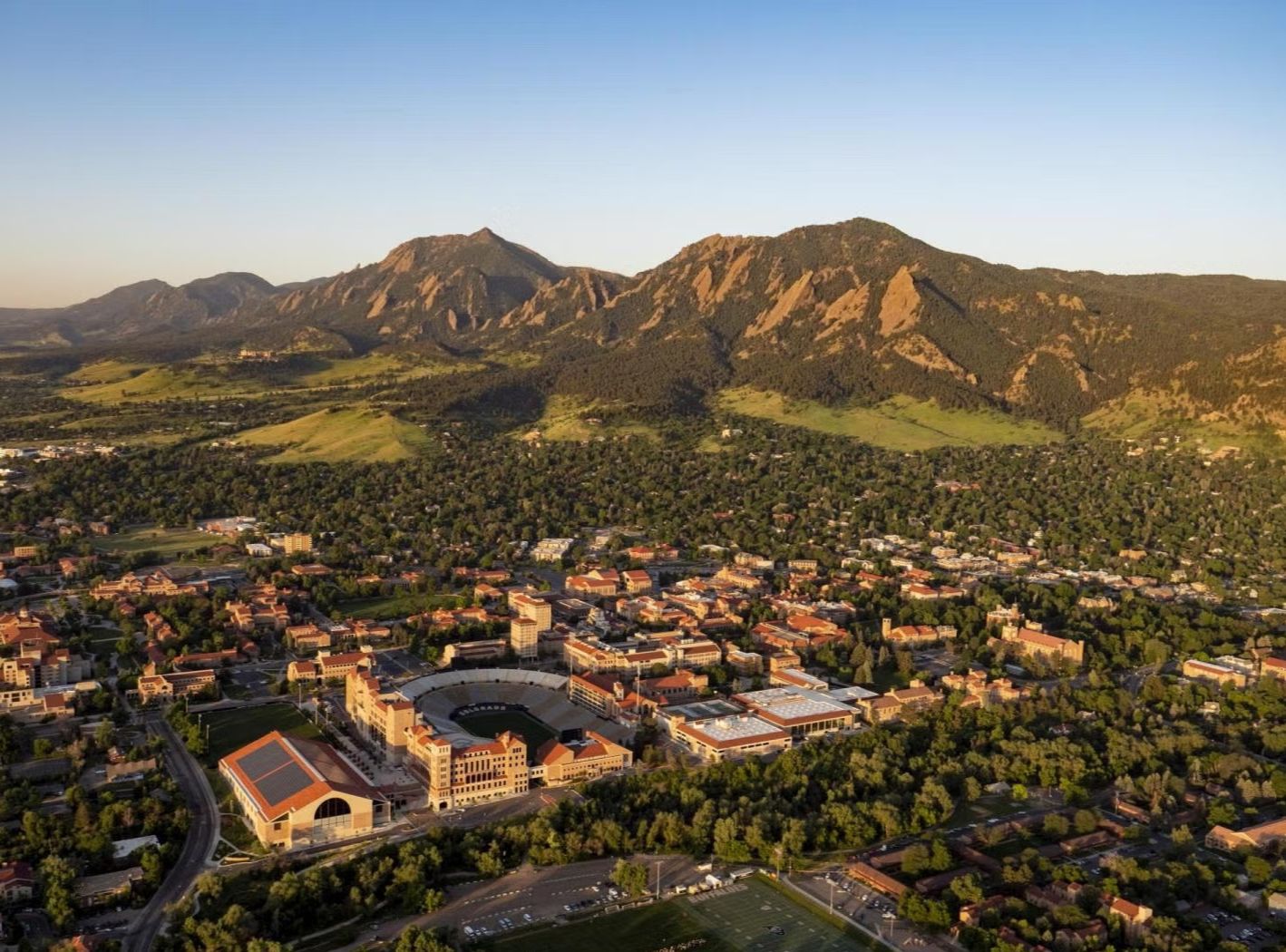
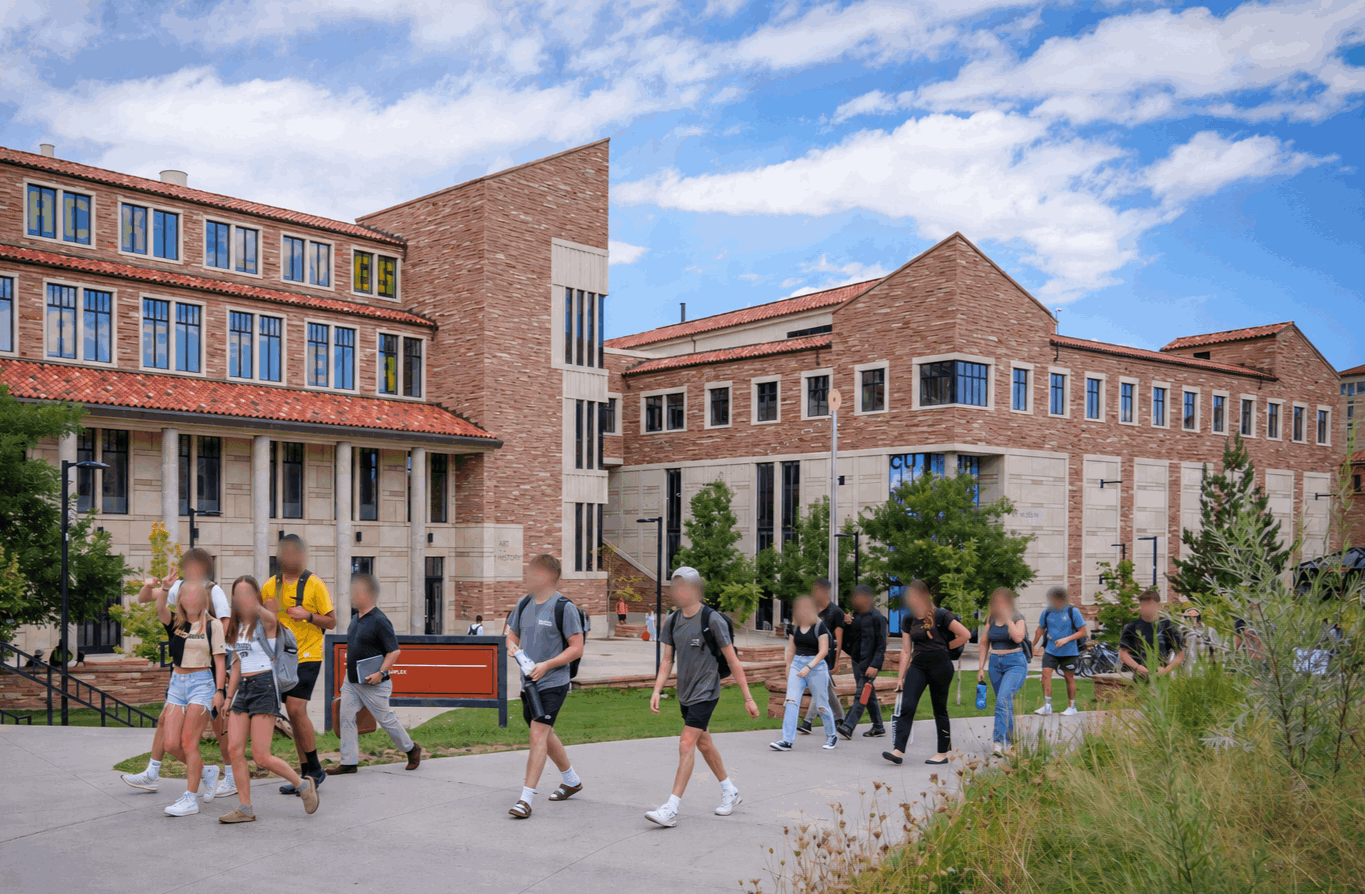
There's a reason visitors who come to tour CU Boulder's campus often end up wanting to move here. The campus itself — designed in what the university calls the Tuscan Vernacular style, all sandstone and red tile roofs — feels like it was placed at the base of the Flatirons deliberately, as if the landscape and the architecture reached an agreement. Farrand Field offers one of the best unobstructed views of the mountains anywhere in the city. Varsity Lake reflects Macky Auditorium, a 2,047-seat concert hall built in 1912 that remains one of Colorado's premier performance venues.
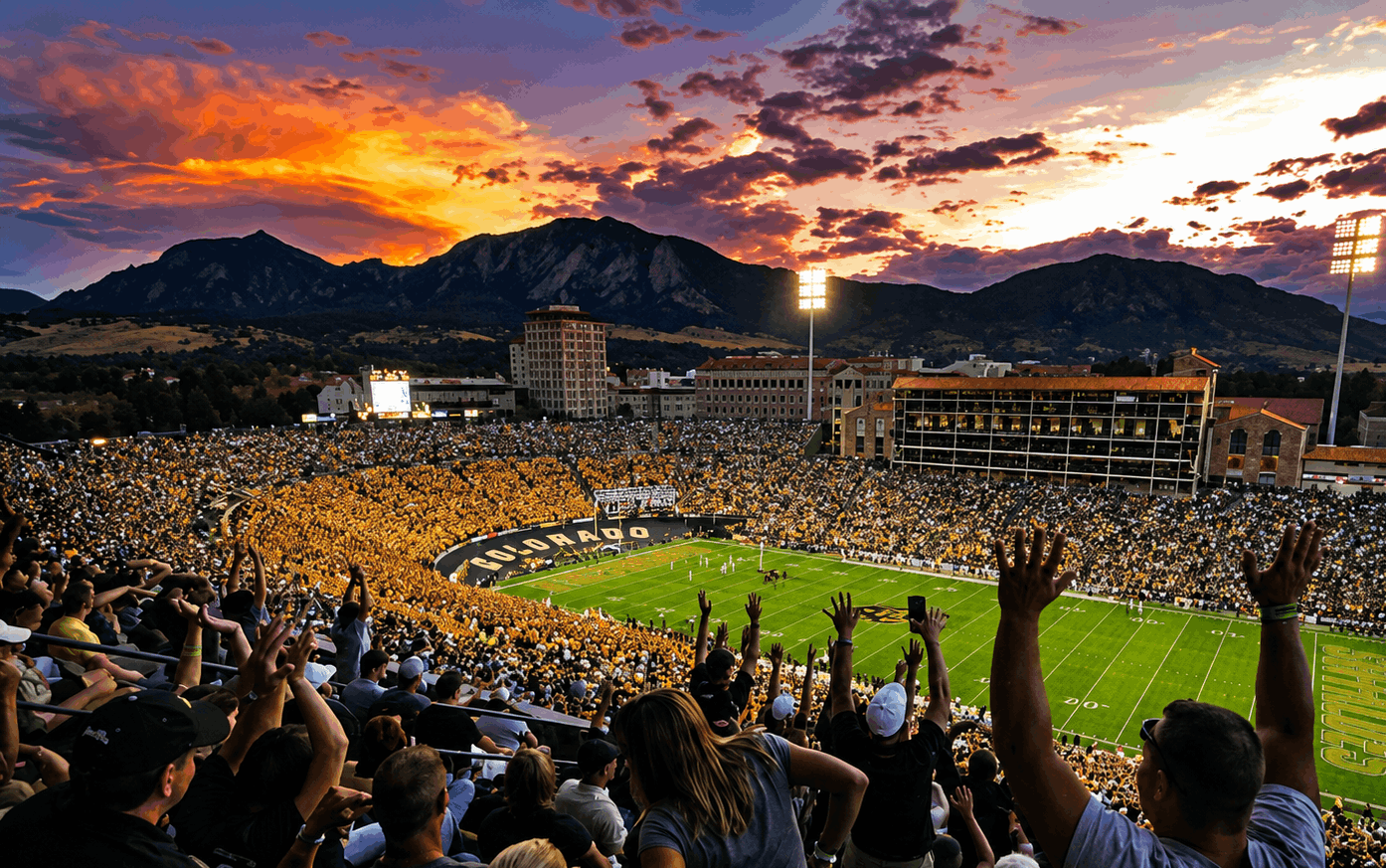
On fall Saturdays, Folsom Field becomes the city's living room. Ralphie — CU's live bison mascot — charges the field at the start of every home game while 50,000 fans watch the Flatirons rise above the student section. It's the kind of thing that sounds like hyperbole until you're standing there.
For people moving to Boulder, or considering it, the university's presence shapes daily life in tangible ways — lectures open to the public, world-class concerts at affordable prices, hiking trails that connect campus to the foothills, and a walkable corridor between the Hill neighborhood and Pearl Street that blends student energy with the city's more established character.
What the 150th Anniversary Means for Boulder Real Estate
Anniversaries of this scale tend to shine a light on what a community has built — and CU Boulder's sesquicentennial is a good moment to articulate something that longtime Boulder residents already know intuitively: the university is the single most durable anchor of value this city has.
Boulder's housing market is shaped by constrained supply, exceptional quality of life, and a talent base that stays. CU Boulder contributes to all three. It attracts researchers and professionals who put down roots. It supports a startup ecosystem that keeps high earners in the city. It maintains Boulder's national and international profile in a way that filters into every neighborhood conversation about why someone chose to move here.
Whether you're a buyer considering Boulder for the first time, a seller thinking about timing and narrative, or an investor tracking the fundamentals of the Boulder real estate market, understanding what CU Boulder contributes to this community is part of understanding why Boulder is different from other Colorado cities of similar size. It always has been. And at 150 years in, it's not slowing down.
It's best to consult with a local real estate professional to understand how these larger dynamics connect to your specific situation — but if you want to start that conversation, I'm always happy to talk about what I'm seeing in this market.
FROM OUR BLOG
Boulder Housing Market October 2026: Are Home Prices Falling?
Updated October 1, 2026 Search for the Boulder housing market right now, and you can find several very different-looking answers. Realtor.com's September 2026 data shows a $910,000 median sold price in Boulder, down 8.5% from a year earlier. Zillow, however, estimates the typical Boulder home value
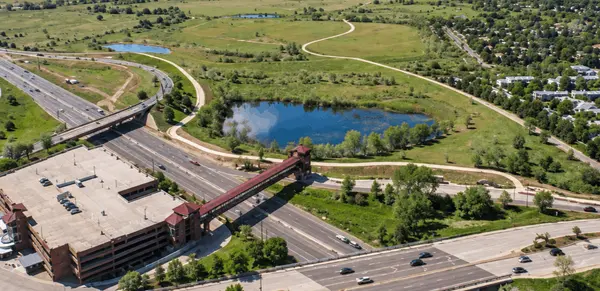
CU Boulder South Is Closing for Years: What the Flood Project Means for South Boulder Residents and Homebuyers
Updated September 29, 2026 CU Boulder South is about to change dramatically. Beginning the week of October 5, 2026, the entire site, including its existing trails, is scheduled to close to public access while the City of Boulder begins the South Boulder Creek Flood Mitigation Project. Construction i
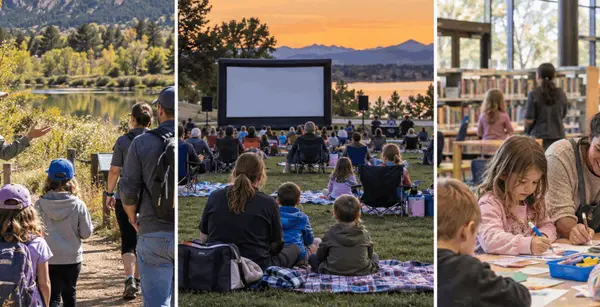
Family-Friendly Things to Do in Boulder: Parks, Trails & More
Boulder is often associated with serious hiking, climbing, and cycling, but experiencing the city with children does not require turning every outing into an endurance event. Some of Boulder's most useful family activities are much simpler: a playground beside a multi-use path, a short walk around a