Why this forum mattered more than a typical conference panel
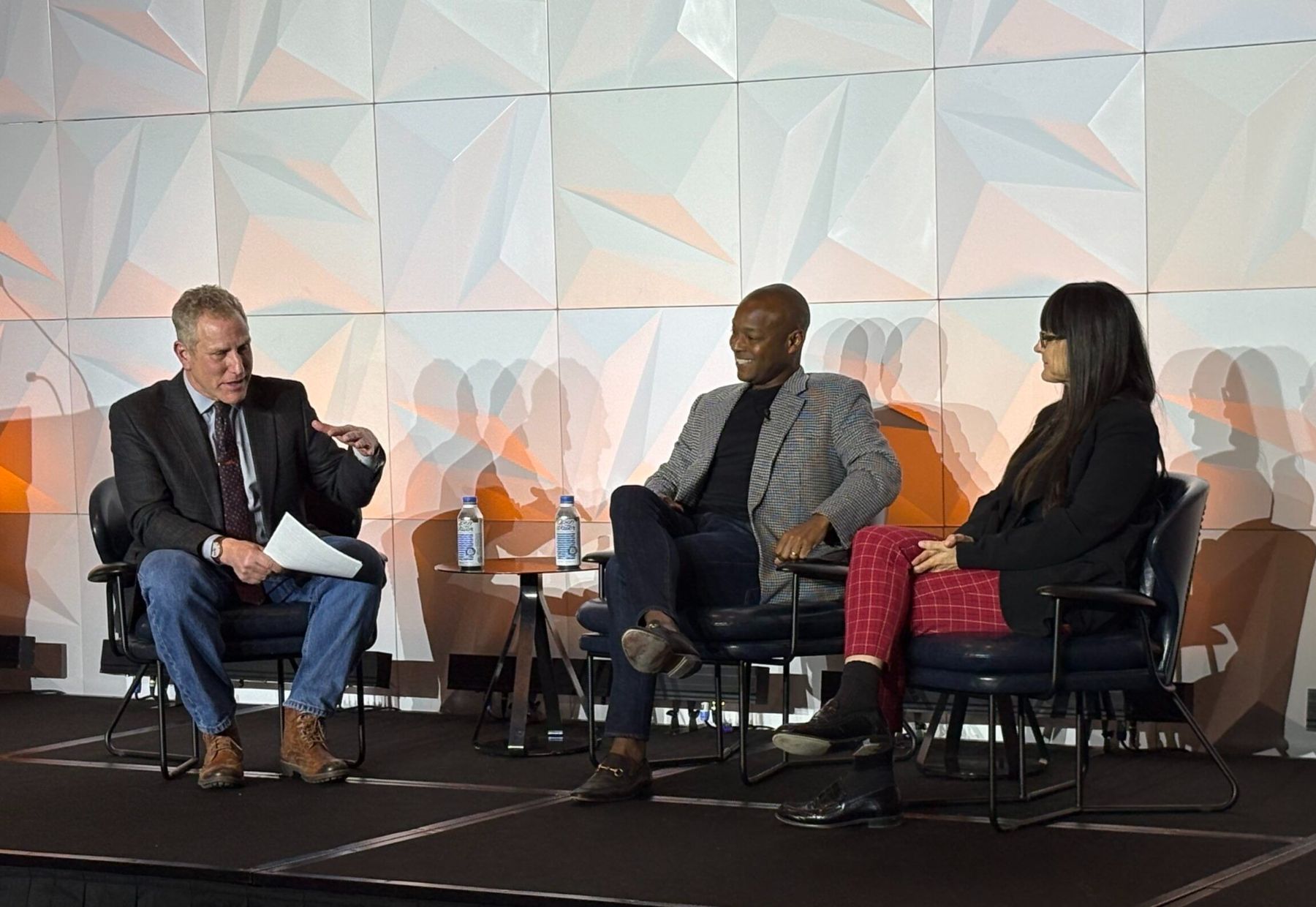
The 2026 CU Real Estate Forum gave Boulder something valuable: an early market-level conversation about what Sundance could mean before the festival actually arrives. That matters because big events often create plenty of noise and not enough strategy. This forum moved the conversation closer to what buyers, sellers, investors, and local business owners actually need to understand.
Hosted by the Leeds School of Business Michael A. Klump Center for Real Estate, the forum brought together Sundance leadership and Boulder business leadership in the same room. That alone is worth paying attention to. When the people shaping a major cultural event are speaking directly to the people shaping the local built environment, the real estate angle is no longer abstract.
For anyone following Boulder real estate, the forum confirmed that Sundance is not being viewed as just a 10-day headline. It is being discussed as an economic, cultural, and place-making opportunity with real implications for housing, commercial space, and long-term city identity.
The biggest takeaways from the forum
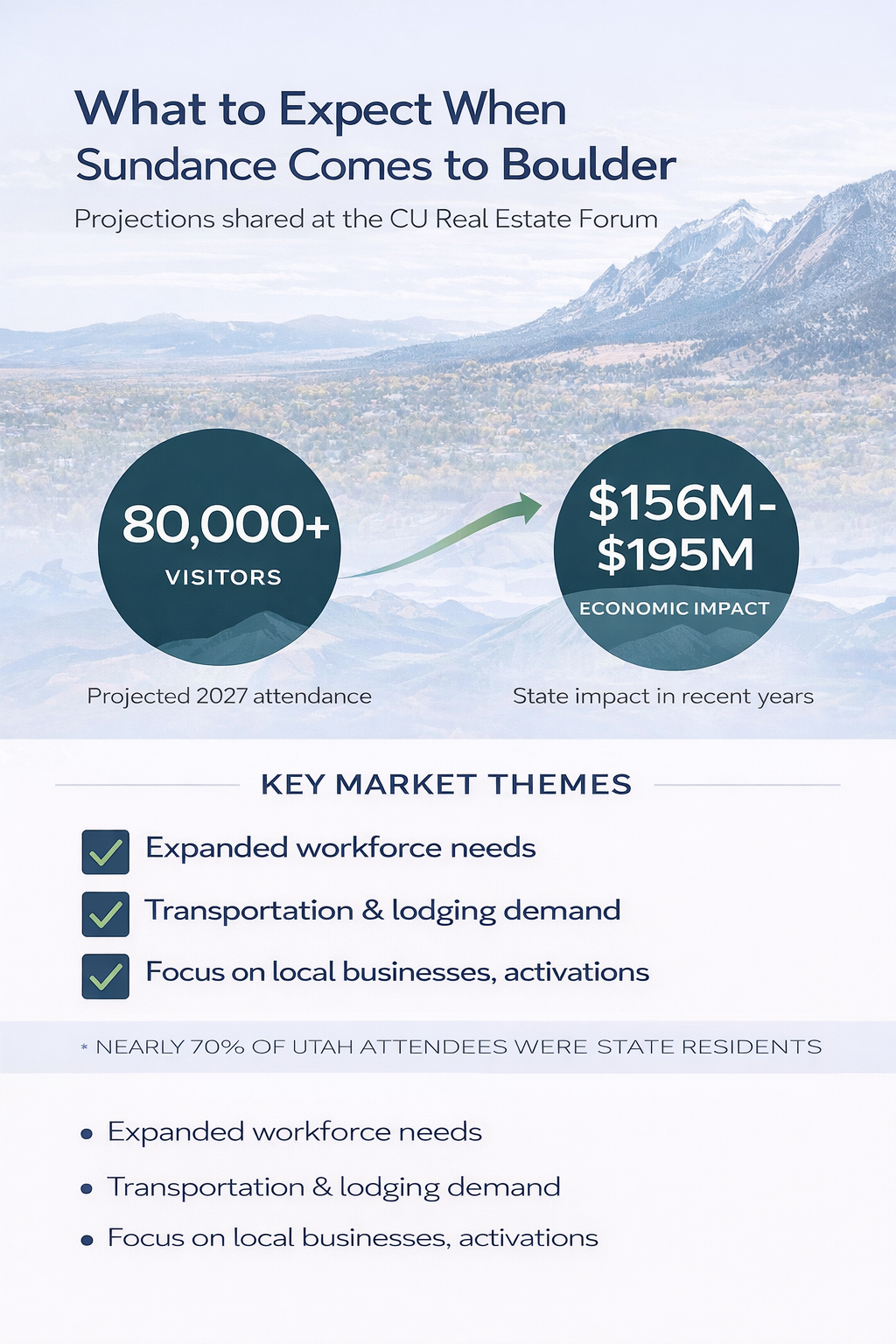
The headline numbers were hard to ignore. Forum speakers said the festival had a state economic impact of roughly $156 million to $195 million in recent years, and organizers projected that as many as 80,000 visitors could come to Boulder during the 2027 event. That is not small-city traffic. That is a major economic wave landing in a market that already runs on limited inventory and high demand.
The second takeaway was just as important: the opportunity is broader than hotel rooms. Speakers pointed to workforce needs, transportation, lodging, activations, and the role local businesses can play during the festival. In other words, Sundance is expected to affect not just where visitors sleep, but how commercial spaces are used, how neighborhoods are experienced, and how Boulder presents itself to the world.
The third takeaway was cultural fit. Organizers noted that in Utah, nearly 70% of attendees were state residents, and they expect strong Colorado participation as well. That suggests Sundance in Boulder may feel less like an imported spectacle and more like a high-profile event that locals actually engage with. From a real estate standpoint, that is good news. Places hold value better when major events strengthen local identity instead of competing with it.
What this could mean for Boulder real estate
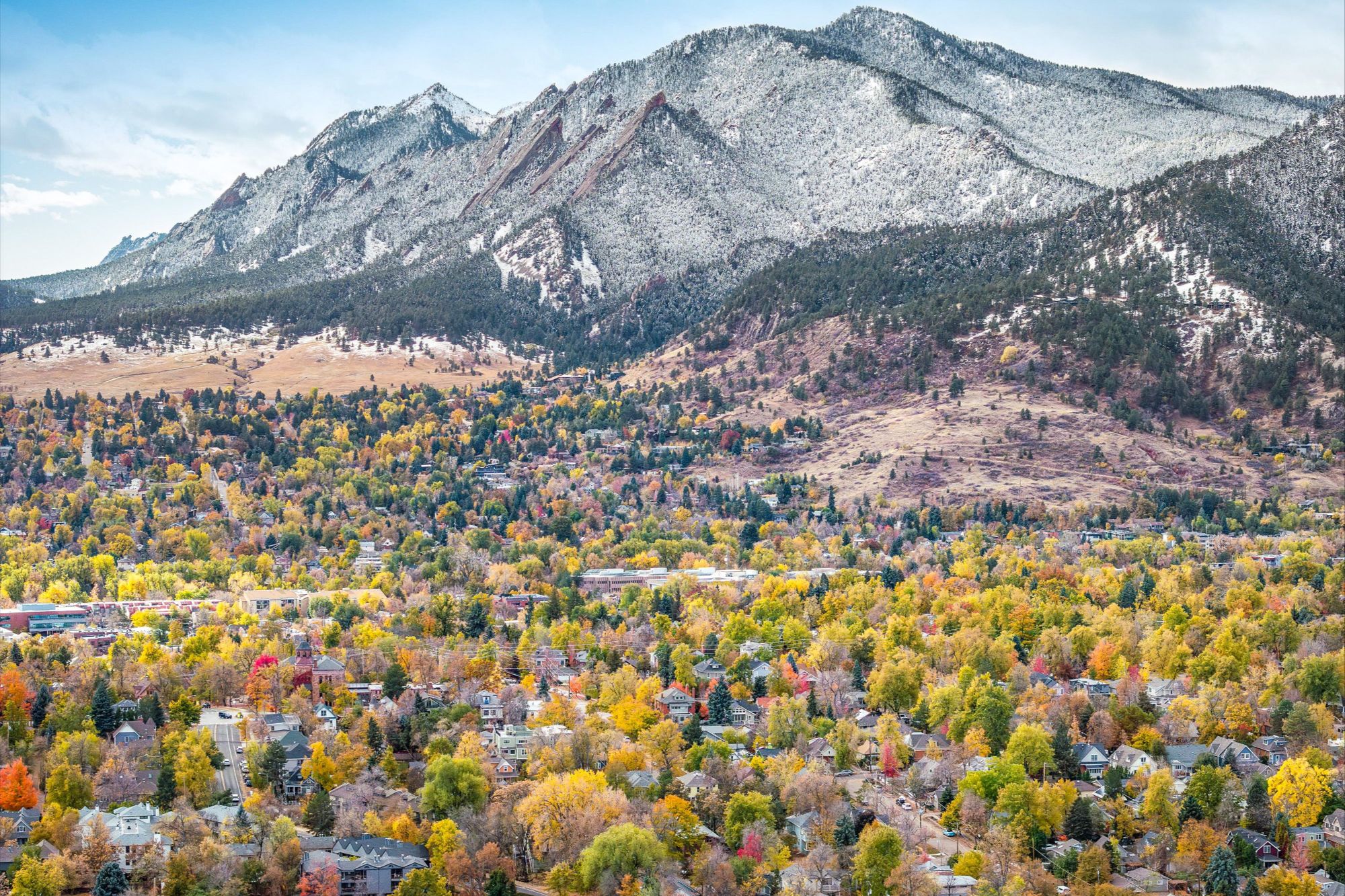
For residential real estate, the forum reinforced a simple idea: Boulder is gaining another demand driver that aligns with the city's existing strengths. This is not a random convention center market. Boulder already offers a walkable downtown, a major university, a nationally recognized outdoor lifestyle, and a strong sense of place. Sundance makes those qualities more visible to a wider audience.
For sellers, that can translate into a stronger city narrative. If you are selling a home in Boulder over the next few years, buyers may increasingly connect the city with culture as much as with trails and mountain views. For buyers, especially those relocating from larger urban markets, Boulder starts to look even more like a place where you can downshift in scale without giving up energy or relevance.
For investors, the most interesting opportunities may sit near the overlap of housing, hospitality, and experience. Think properties near downtown Boulder, the Dairy Arts Center corridor, University Hill, and venue-adjacent pockets where walkability and access matter. The forum did not say home prices will jump because of Sundance, and that is not the right read anyway. The better read is that Boulder is becoming even more legible as a high-demand, high-identity market.
Development outlook: watch the spaces between lifestyle and commerce
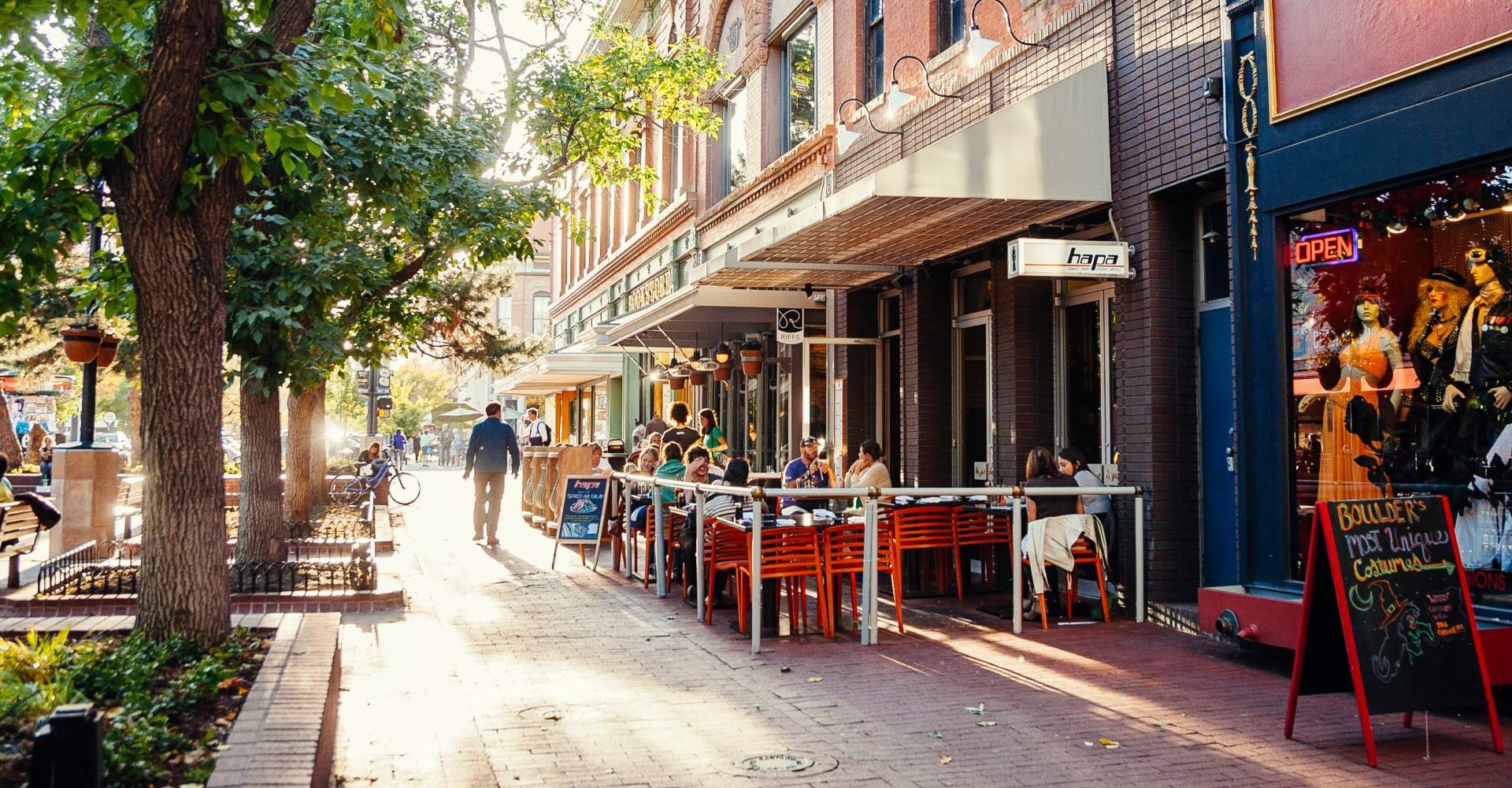
One of the most interesting pieces of the forum was the discussion around activations. The Boulder Chamber has already launched a Sundance partner hub to connect organizations seeking space with available commercial properties across the city. That tells you a lot about where the commercial side of the market may move.
Properties that can host events, brand experiences, pop-ups, screenings, or hospitality-adjacent uses may become more valuable strategically, even if not every building changes hands. Creative office, retail, and mixed-use spaces could benefit from the kind of short-term visibility and long-term branding that major cultural events generate.
That does not mean Boulder suddenly turns into a festival-only economy. It means the city has another reason to invest in active, flexible, experience-rich districts. And from a real estate perspective, that tends to support places that already work well for residents every other week of the year.
What buyers, sellers, and investors should watch next
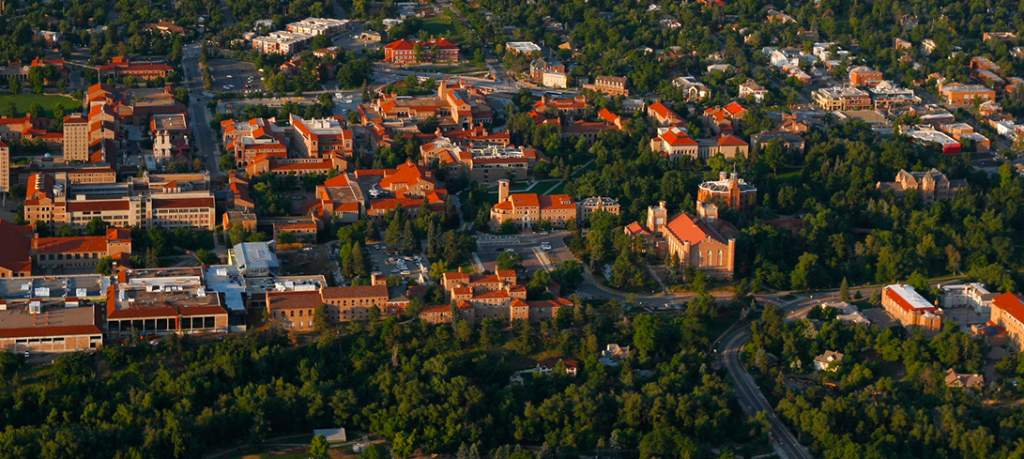
If you are buying a home in Boulder, keep an eye on neighborhoods that combine day-to-day livability with event-time convenience. Downtown-adjacent areas, Whittier, parts of University Hill, and central neighborhoods near arts and campus venues could keep standing out.
If you are selling a home in Boulder, the timing and positioning conversation is getting more nuanced. Buyers are not just looking at bedrooms and bathrooms. They are looking at access to Pearl Street, CU Boulder, culture, dining, and the overall Boulder lifestyle. Those details matter even more when the city is gaining global visibility.
And if you are investing in Boulder real estate, watch policy, lodging rules, and commercial activation trends just as closely as home prices. The forum made it clear that Sundance is creating opportunity, but the winners will likely be the people who understand Boulder's local rules and neighborhood patterns, not just the headline buzz.
The long view on Boulder
The most encouraging part of the CU Real Estate Forum was not the size of the numbers. It was the tone. The conversation centered on sustainability, synergy, and how Boulder can host Sundance in a way that feels aligned with the city rather than forced onto it.
That is exactly the kind of long-view thinking that tends to support strong real estate markets. Boulder does not need to become something else to benefit from Sundance. It just needs to keep leaning into what already makes it desirable: walkability, culture, outdoors, education, and a community that cares about place.
That is good news for anyone watching Boulder homes for sale, considering moving to Boulder, or building a long-term strategy around Boulder real estate.
FROM OUR BLOG
Boulder Rental License Requirements 2026: Fees, Inspections & How to Apply
Renting out a home in Boulder involves more than finding a tenant, setting a monthly rent, and signing a lease. Before most residential properties inside Boulder city limits can legally be advertised or rented, the owner must obtain a rental housing license from the City of Boulder. That requirement
Boulder Homeowners Insurance 2026: Wildfire, Hail & What Buyers Need to Know
Buying a home in Boulder involves more than finding the right neighborhood, negotiating a purchase price, and qualifying for a mortgage. There is another important consideration that can affect both the monthly cost of ownership and the ability to complete a purchase: homeowners insurance. In Boulde
Boulder Down Payment Assistance 2026: How First-Time Buyers Can Get Up to $100,000
For many Boulder buyers, the challenge is not simply qualifying for a monthly mortgage payment. It is getting enough cash together for the down payment, closing costs, reserves, and everything else that comes with buying a home in one of Colorado's more expensive housing markets. What many buyers do