
A productive CU Boulder visit should answer two questions: Does the university fit the student academically, and does Boulder make sense as the place where that student will actually live? The formal campus tour helps with the first question. To answer the second, parents and prospective students should also test transportation, walk between key parts of campus, see nearby commercial areas, and spend time in Boulder beyond the postcard views.
This CU Boulder visitor guide is designed for a one- or two-day college trip. It covers how to organize the official visit, current parking and transit details as of August 18, 2026, what to examine on campus, and how to add University Hill, downtown Boulder, Boulder Creek and Chautauqua without turning the day into a rushed sightseeing itinerary. It also explains what families should know if a future housing or real estate decision becomes part of the conversation.
Start With the Official CU Boulder Visit, Then Customize It
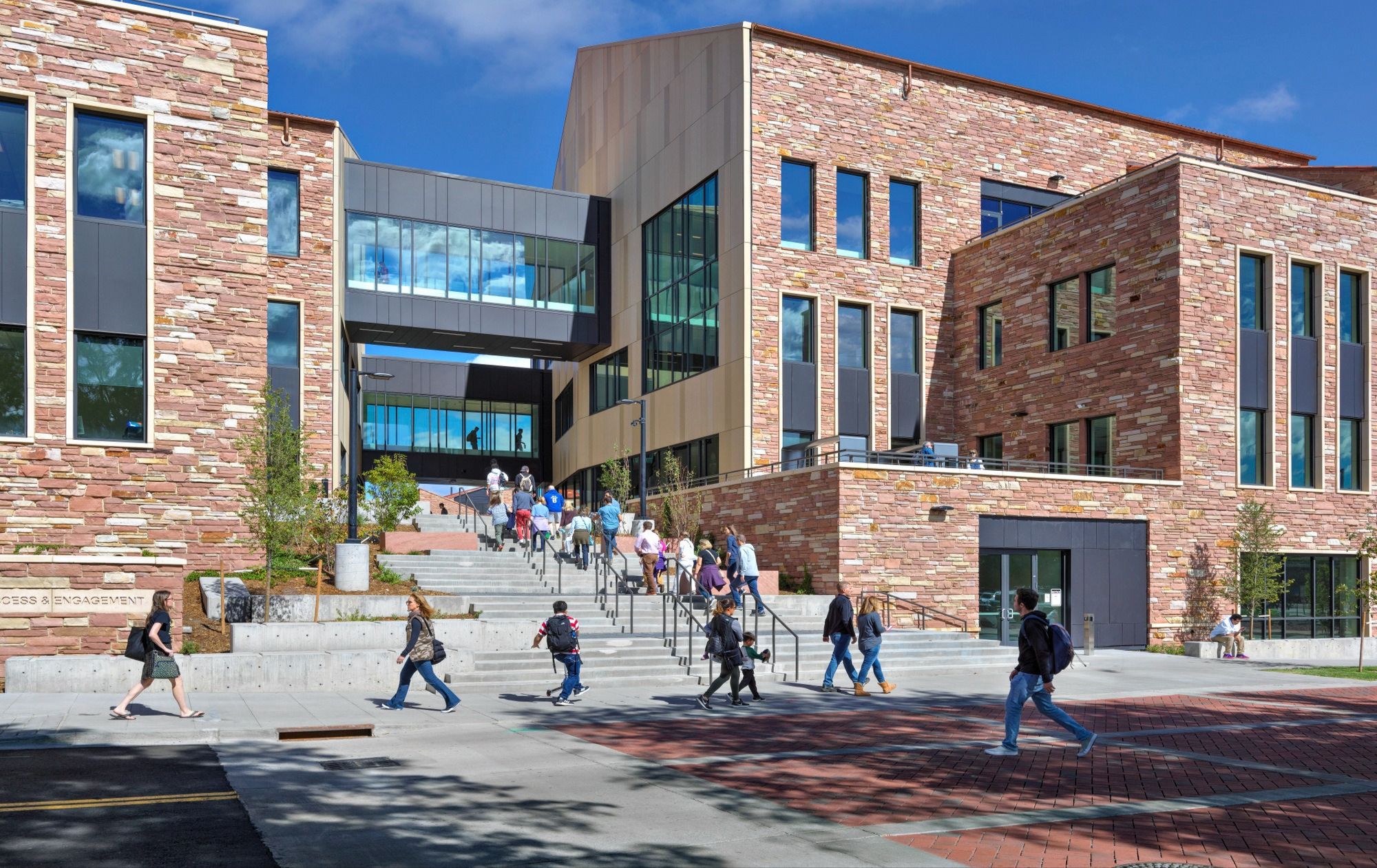
The best starting point is CU Boulder’s official Admissions visit program, but the most useful college visit adds academic and student-life stops specific to the prospective student.
CU Boulder offers separate visit resources for first-year, transfer and other prospective students. Its standard undergraduate Information Session & Campus Tour includes a general information session followed by a student-led walking tour that CU describes as approximately 90 minutes to two hours. The university recommends registering through its Admissions visit system rather than simply arriving and expecting space on a tour.
Before booking flights or a hotel, look at the actual visit calendar for your dates. Tour times vary by season, and the university also offers college-, school- and program-specific opportunities when available. A prospective engineering student, for example, will get more from the trip by seeing the engineering complex and asking program-specific questions than by treating the general campus tour as the entire visit.
CU’s Admissions office is in the Regent Administrative Center, while the university catalog identifies the Center for Academic Success and Engagement, commonly called CASE, as the location for daily information sessions and tours. Your registration confirmation should take precedence if it gives different arrival instructions.
A useful pre-visit checklist is to identify:
- The intended major or two possible academic programs.
- One student organization, research area, performing-arts program or other activity worth asking about.
- Housing questions that matter to the student, such as residence-hall location, dining, transportation and room configuration.
- Any accessibility accommodations that should be arranged before arrival.
- Two or three questions that are difficult to answer from the admissions website.
Try to visit while classes are in session if your schedule permits. A summer tour is still valuable, but an academic-year visit gives you a better sense of pedestrian traffic, buses, dining lines and the practical distance between buildings.
Plan Parking and Transportation Before You Arrive
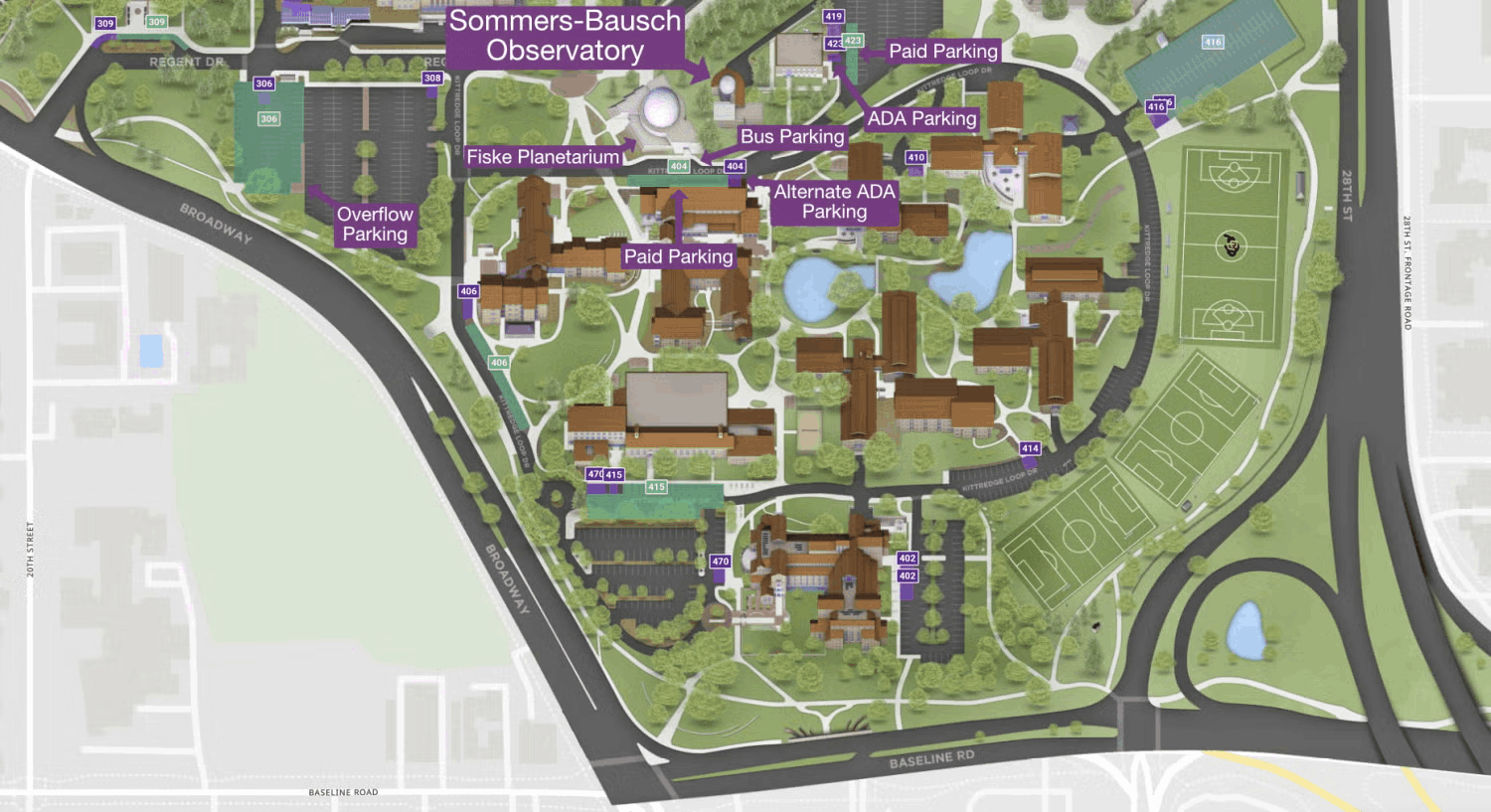
Do not treat CU Boulder parking as an afterthought: campus parking rules changed in August 2026, and transit can sometimes be easier than moving a car between Boulder destinations.
Effective August 1, 2026, CU Boulder says all campus parking lots are monitored at all times and require a valid permit or payment. Visitors can use designated hourly pay-to-park locations, including visitor areas in the Euclid and Folsom parking garages, subject to availability and event or construction impacts. CU’s parking FAQ also lists a $10 one-day short-term permit as of August 18, 2026. Verify the current price and permitted lot before relying on that option.
If you registered for an admissions event, follow the parking directions in the confirmation email. CU specifically directs visitors to use its campus map and their event instructions to identify the appropriate parking location.
Coming from Denver International Airport
CU identifies Denver International Airport as the principal airport for visitors. RTD provides Boulder-to-airport service under its AB routes; as of August 2026, RTD lists an Airport Day Pass at $10. Current timetables should be checked shortly before travel because route patterns and service schedules can change.
Travelers coming from Denver rather than the airport can also use RTD’s Flatiron Flyer service connecting Denver and Boulder along the US 36 corridor.
Getting around once you are in Boulder
For the area around campus, downtown and University Hill, walking and transit can be more practical than repeatedly finding parking. The City of Boulder’s HOP circulator serves central Boulder destinations, although as of August 18, 2026, the city is posting a temporary HOP detour associated with Colorado Avenue construction. The city and CU recommend checking the Transit app for current routing and arrival information.
One useful experiment for a prospective student is to make at least one trip without the family car. Walk from campus toward University Hill, take a bus, or trace the route to a residence-hall area. Daily transportation can affect the student experience in ways that a driving tour cannot show.
Look Beyond the Tour Route to See How Campus Would Work Every Day
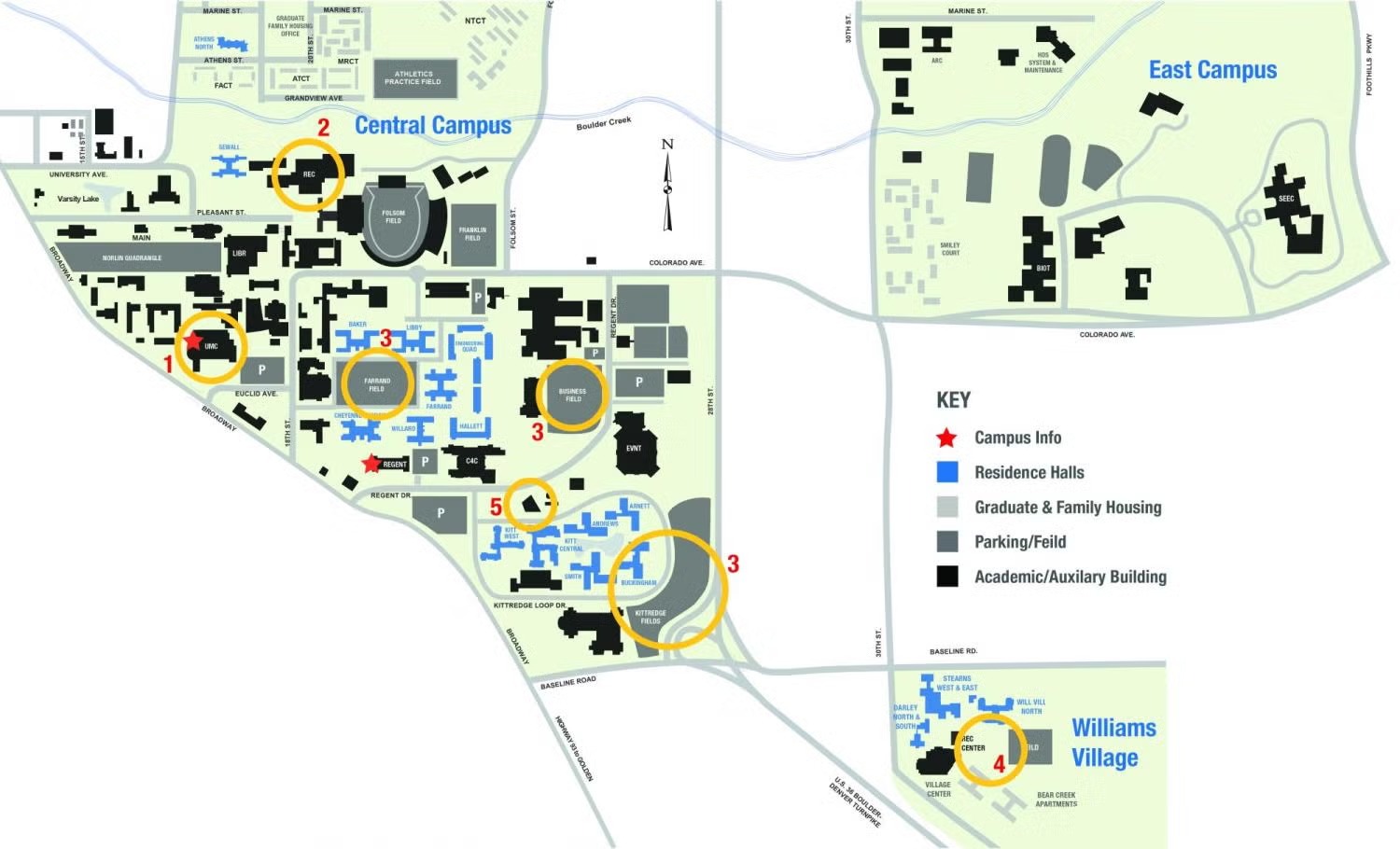
A campus visit becomes more useful when you evaluate ordinary routines: classrooms, housing, meals, recreation and the distance between them.
The official CU campus map lets visitors locate academic buildings, housing and parking before arriving. Use it to choose a few destinations that matter to the student rather than trying to cover every part of campus.
For many prospective undergraduates, the most informative stops include an academic building connected to the intended major, the University Memorial Center area, a library or study space, a dining location, and at least one residence-hall area. If the student has a highly specific program interest, check whether that college or department has its own visit opportunity.
Do not assume a residence hall will be open for an informal walk-through. Building access and organized housing tours can vary, so use CU’s Housing & Residence Life resources to research hall types and ask Admissions what can actually be viewed on your date. CU publishes its residence-hall and apartment-style housing options online.
Dining is also worth testing rather than discussing abstractly. CU Dining publishes current location information, menus and break-period changes online, which is especially useful during summer, winter break and spring break when normal operations may be reduced.
Then walk west toward University Hill, rather than seeing it only through a windshield. The City of Boulder maintains the University Hill General Improvement District commercial area immediately associated with the campus environment, with restaurants, shops and entertainment businesses. The point of the walk is not to decide whether you “like” a neighborhood in ten minutes. It is to understand the relationship among campus entrances, commercial services, hills, intersections, bus stops and everyday walking routes.
Parents can also use this portion of the visit to observe practical details: Does the student expect to carry equipment across campus? Is a bicycle realistic? Would a particular academic program mean frequent travel between main campus and another facility? Those are better questions than simply asking how many minutes a generic commute is supposed to take.
Add Enough of Boulder to Understand the Setting, Not Just Sightsee
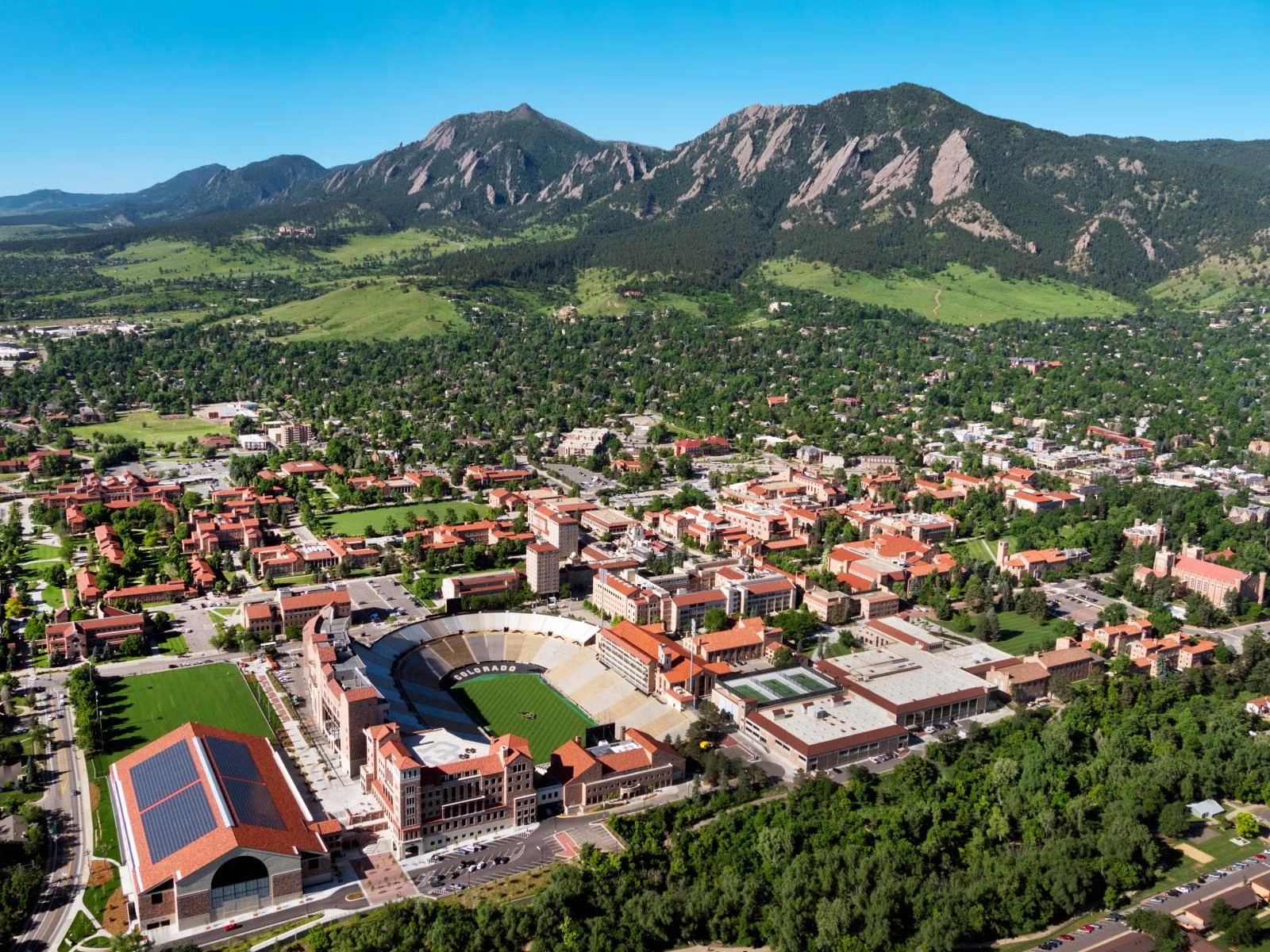
After the campus tour, choose two or three nearby Boulder stops that reveal how the university connects with the rest of the city.
A useful first stop is downtown Boulder and Pearl Street. Visit Boulder describes the central Pearl Street pedestrian area as four traffic-free blocks, with additional businesses extending beyond the pedestrian section. Instead of trying to cover every shop or restaurant, spend enough time there to understand the scale of downtown and its relationship to campus.
The Boulder Creek Path is another useful orientation tool. The City of Boulder describes it as a 5.5-mile multi-use path running between Boulder Canyon on the west and the Stazio area on the east, passing downtown destinations along the way. You do not need to travel all 5.5 miles; even a short section helps demonstrate how Boulder’s off-street path system connects parts of the city.
If time and weather allow, Chautauqua Park gives visitors a closer look at the foothills setting that shapes Boulder’s geography. Parking requires planning during peak season. For 2026, the City of Boulder’s Park-to-Park program runs from May 23 through September 7, with free shuttle service from designated satellite parking and $2.50-per-hour paid parking in specified Chautauqua areas on summer weekends and holidays. Those dates and rates should be updated for future seasons.
A workable full-day sequence is:
- Morning CU Boulder information session and campus tour.
- Lunch on or near campus.
- Walk through University Hill.
- Downtown/Pearl Street and a short Boulder Creek Path walk.
- Chautauqua late in the day if weather, daylight and parking conditions cooperate.
For lodging, there is no single location that works for every visitor. Staying closer to campus can reduce morning logistics; downtown puts restaurants and Pearl Street within easy reach; lodging near Boulder Junction or the 28th Street corridor can offer another transportation pattern. Visit Boulder maintains a current lodging directory, including a hotels-near-CU category, which is preferable to relying on an old static hotel list.
If hiking is part of the plan, check City of Boulder Open Space and Mountain Parks conditions before heading out. Trail closures, parking conditions and seasonal restrictions can change quickly.
Parents Should Use the Visit to Understand Student Housing and Daily Logistics
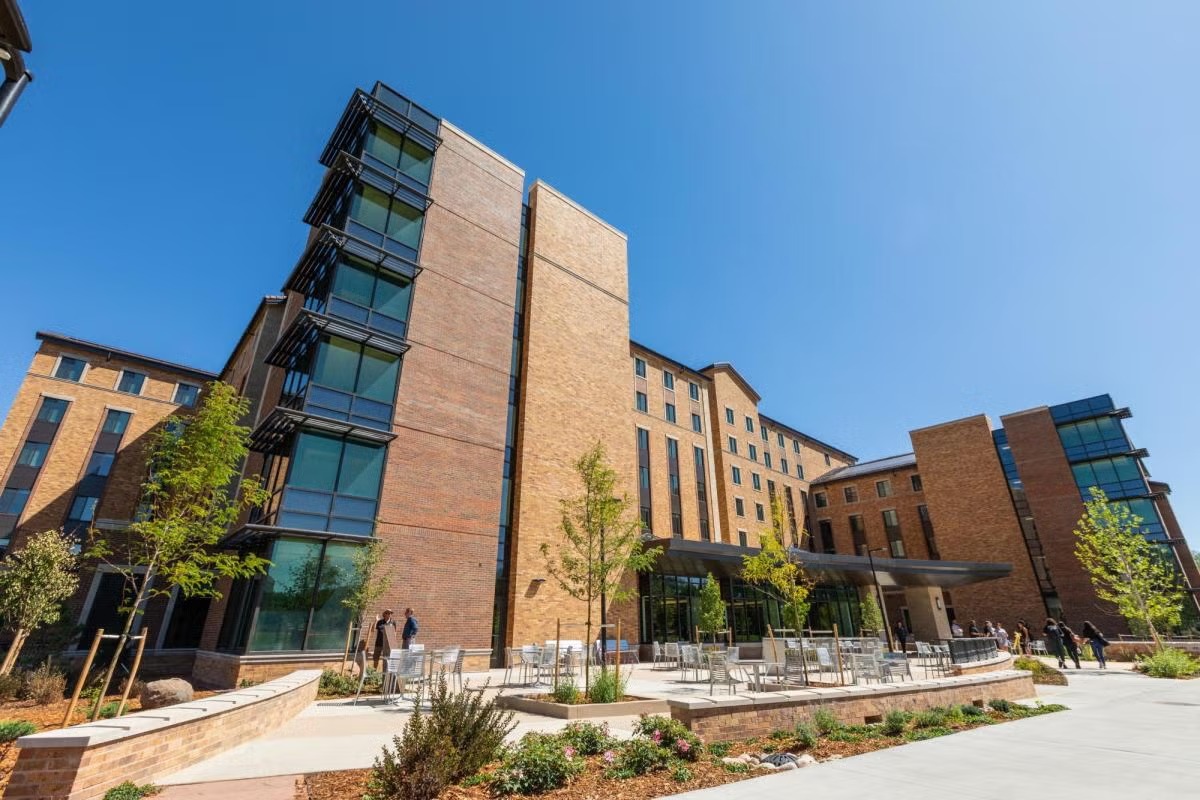
For a prospective first-year student, investigate on-campus housing first; a future off-campus apartment or property decision is a separate question with different rules.
CU Boulder’s current undergraduate catalog states that, subject to space availability, first-year students are required to live in a residence hall for two academic semesters, with specified exceptions and a petition process for other circumstances. Families should confirm the rule for the student’s entering class rather than assuming a parent-owned condo automatically replaces the first-year residence requirement.
That makes the first campus visit a good time to compare residence-hall locations rather than immediately shopping for off-campus housing. Look at distance to the student’s likely academic buildings, Buff Bus routes, dining arrangements, bike storage and the practical route to groceries and everyday services.
For later years, CU’s Off-Campus Life office provides resources for students and families navigating off-campus housing and commuting, and CU operates Ralphie’s List as a housing-search resource. Current listings can be useful for seeing the range of available housing, but asking rents and availability change constantly and should never be treated as reliable long-term market statistics.
Families comparing future housing options should separate three different questions:
- Where could the student live? That involves CU rules, lease terms and availability.
- What housing arrangement makes financial sense? That requires comparing rent, ownership costs, financing, HOA dues where applicable, maintenance, insurance, taxes and the expected holding period.
- Could a purchased property legally be rented later? That requires property-specific review of zoning, rental licensing, HOA documents and applicable city rules.
Avoid assuming that proximity to CU automatically makes a property a successful investment. Rental demand, financing, condition, HOA restrictions, maintenance costs, licensing requirements and future resale conditions can all affect the outcome.
The visit itself is useful because it gives parents and students a physical reference point. A property that appears “close to CU” online may function very differently depending on the actual walking route, grade changes, bus access, bicycle infrastructure, parking and the student’s primary academic buildings.
If a CU Visit Leads to a Boulder Real Estate Conversation, Do Property-Specific Due Diligence
Buying a Boulder property because a student may attend CU is a real estate decision, not an extension of the admissions decision, and the property needs to work on its own facts.
For families considering a condo, townhouse, duplex or house during a student’s time in Boulder, start with the intended use. Will the property be owner-occupied? Used only by a family member? Rented to other tenants? Held beyond graduation? Each scenario can lead to different financing, HOA, tax, insurance and regulatory questions.
Within the City of Boulder, standard long-term rentals are generally rentals of 30 days or more, and the city requires rental licensing in situations covered by its ordinance. As of August 18, 2026, the city lists a standard long-term rental-license fee of $190, subject to exemptions and other requirements. The city has also changed occupancy regulations in response to Colorado legislation, so older internet summaries about limits on “unrelated persons” may be outdated. Confirm current requirements with City of Boulder Rental Housing Licensing and, when needed, qualified legal counsel before purchasing based on a rental strategy.
Zoning must also be checked by parcel. The City of Boulder provides an address-based zoning map, and zoning can affect permitted uses, setbacks, height and other development standards. An HOA or condominium declaration can impose additional restrictions that are separate from city zoning.
Environmental and insurance due diligence matters as well. Boulder maintains an interactive floodplain map and directs property owners to FEMA mapping for federal flood information. The city also has wildfire-risk and Wildland-Urban Interface resources that may affect certain properties. Do not infer flood or wildfire status from a neighborhood name or from how a house looks during a showing; check the specific parcel and obtain current insurance information.
For any Boulder purchase, buyers should independently verify school boundaries if relevant, zoning, permits, rental licensing, HOA rules, property condition, flood information, wildfire considerations, insurance availability and cost, financing, taxes and other property-specific matters with the appropriate professionals and agencies.
If your CU Boulder visit has also raised questions about where owning a home or condo would fit into your family’s longer-term plans, Eric can help you compare properties based on actual location, housing type, HOA structure, transportation access and current Boulder regulations. Online guides are a useful starting point, but they cannot replace reviewing the specific property, contract, HOA documents, permit record, inspection findings, insurance quote and financial situation before making a decision.
FROM OUR BLOG


Family-Friendly Things to Do in Boulder: Parks, Trails & More
Boulder is often associated with serious hiking, climbing, and cycling, but experiencing the city with children does not require turning every outing into an endurance event. Some of Boulder's most useful family activities are much simpler: a playground beside a multi-use path, a short walk around a

Pearl Street Mall Guide: Where to Eat, Shop, and People-Watch
Pearl Street Mall is one of the easiest places to start understanding Boulder, but there is an important distinction first-time visitors often miss: the pedestrian mall itself is only four blocks, from 11th Street to 15th Street. Downtown shopping and dining continue east and west well beyond those

Boulder Without a Car: Walkable, Bikeable, and Transit-Friendly Things to Do
If you are considering Boulder without a car, the useful question is not simply, “Is Boulder walkable?” It is whether the places you actually use can be connected comfortably by walking, biking, and transit from a specific address. Boulder gives car-free and car-light residents more infrastructure t