
Two great Colorado cities - two very different daily experiences
If you are deciding between Boulder and Denver, you are not really choosing between a good option and a bad one. You are choosing between two very different versions of Colorado living. 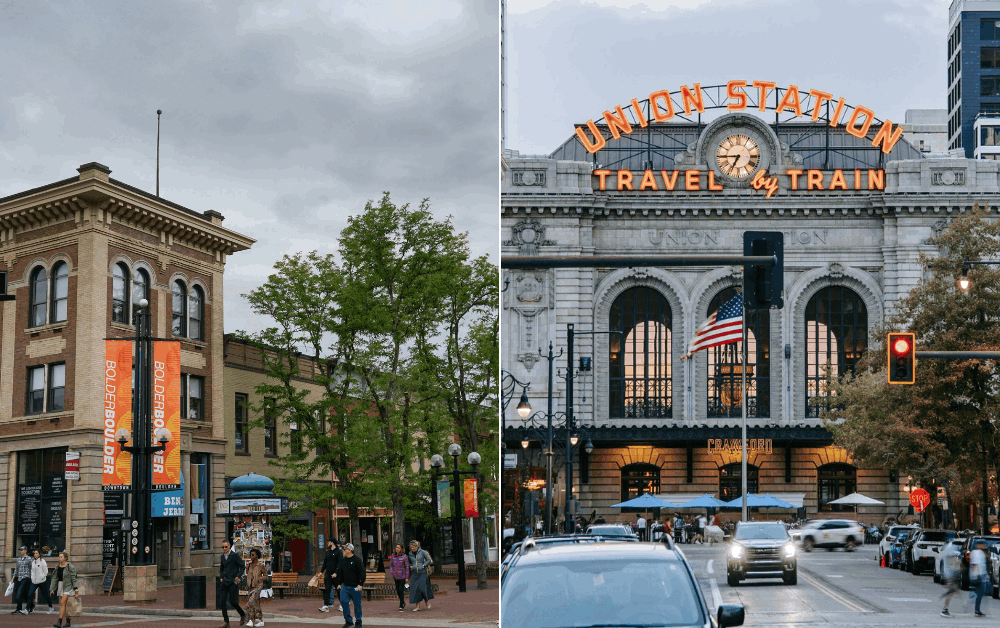
Denver gives you scale. More neighborhoods, more nightlife, more job clusters, more housing types, and a much bigger urban menu from LoDo to RiNo to the Highlands to Wash Park. Boulder gives you focus. The city feels smaller, tighter, and more lifestyle-driven, with the Flatirons always in view, Pearl Street acting like a true town center, and trails, bikes, cafes, and campus life woven right into the routine.
So the better question is not 'Which city is better?' It is 'Which city fits the life I actually want to live?'
Lifestyle: Boulder feels more outdoors-first, Denver feels more city-first
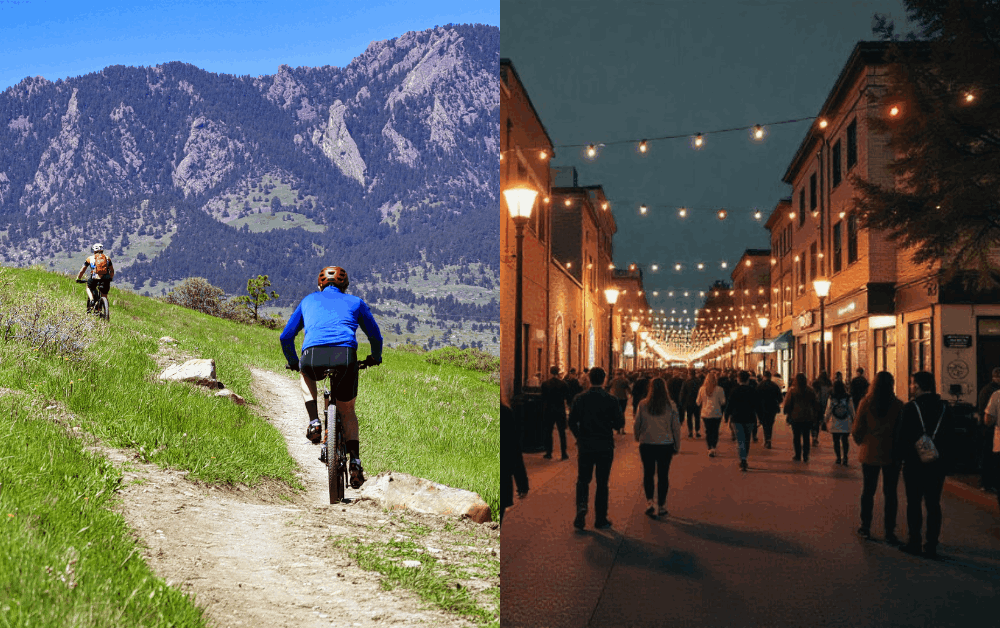
Boulder is the move if you want your weekdays to feel closer to your weekends. Chautauqua trails, bike paths, neighborhood coffee shops, the Hill, and Pearl Street all sit close together, so daily life can feel more intentional and less spread out. It is one of the biggest reasons people love moving to Boulder.
Denver is stronger if you want urban variety. You have major-league sports, larger museums, more concert venues, more distinct neighborhood identities, and a broader restaurant and nightlife scene. It is simply a bigger city with bigger-city options.
The tradeoff is pace. Boulder tends to feel calmer and more curated. Denver tends to feel faster and more open-ended. Neither is wrong. It depends on whether you want a lifestyle centered around access and rhythm or one centered around choice and scale.
Real estate: Boulder is pricier, Denver offers more range
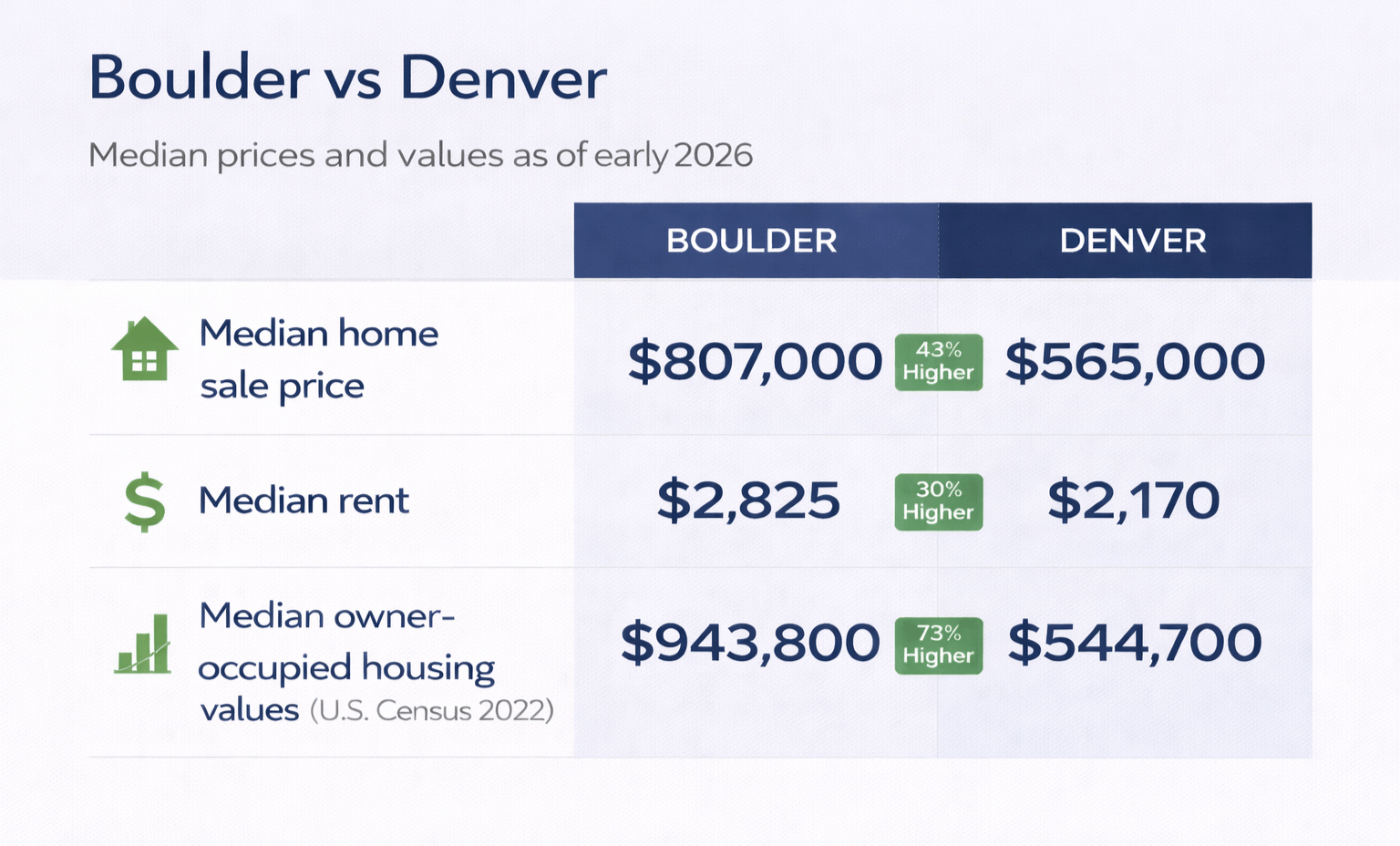
From a housing perspective, Boulder is usually the premium market. Recent Redfin data showed a median Boulder sale price of about $807,000 in February 2026, while Denver's median sale price was about $565,000. Census housing data tells a similar story on long-term values, with owner-occupied homes valued much higher in Boulder than in Denver.
That price gap is not just about status. It reflects scarcity, land constraints, and the fact that Boulder offers a very specific product: a smaller city with high lifestyle value and limited room to expand. If you are buying a home in Boulder, you are paying for access to trails, schools, downtown character, and a market that historically holds strong long-term appeal.
Denver gives buyers more price points, more neighborhood choices, and more inventory styles, from downtown condos and duplexes to bungalows and suburban-feeling single-family homes. If your budget matters more than living five minutes from a trailhead or Pearl Street, Denver often gives you more flexibility.
For investors, the distinction is useful. Investing in Boulder real estate is often a quality-and-scarcity play. Investing in Denver can be more of a scale-and-optionality play.
Walkability and commuting: the answer depends on where you live
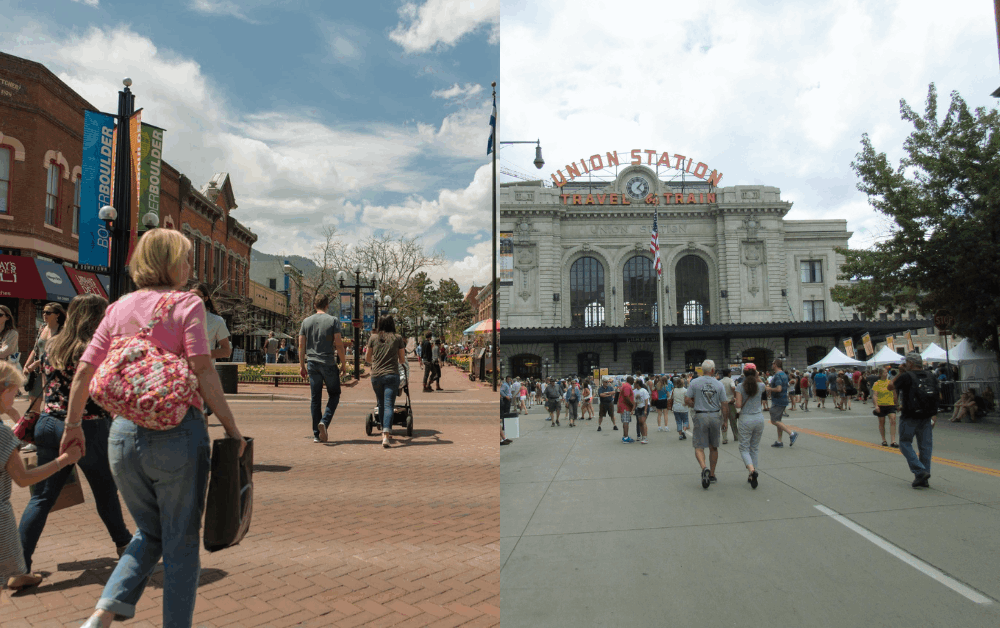
Denver's citywide Walk Score is higher than Boulder's, which makes sense in a larger, denser urban grid. But daily life on the ground is a little more nuanced. Central Boulder, especially around Pearl Street, can feel exceptionally easy to navigate on foot or by bike. Walk Score gives the Pearl Street and 23rd Street area an 88, which lines up with what locals already know: if you live near downtown, many errands and social plans are close at hand.
Denver shines if you want a transit-connected urban core with multiple dense neighborhoods. Union Station, LoDo, and nearby districts create a different kind of convenience, especially if your work or social life is tied to downtown Denver.
Boulder shines if you want compact lifestyle access. It is not always about walking to everything in a grid. It is about getting to campus, a trail, a market, a cafe, and dinner without feeling like the city is sprawling around you.
For commuters, Denver also offers better proximity to a larger job base and Denver International Airport. Boulder wins on shorter day-to-day lifestyle loops if your world is centered in town.
Culture, food, and neighborhood identity
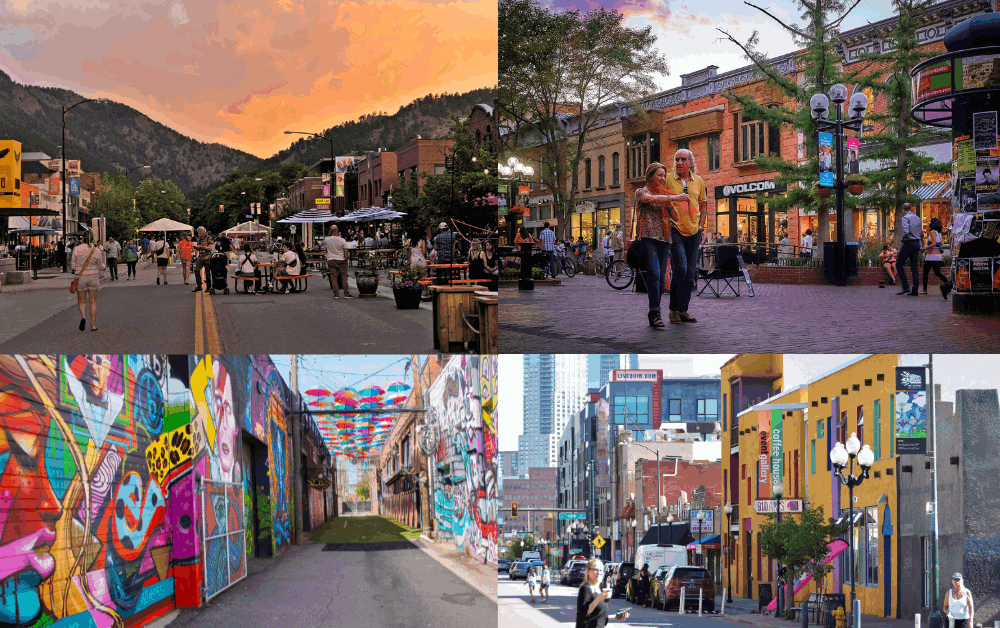
Denver has the edge on sheer volume. More neighborhoods, more galleries, more live music, more pro sports, more late-night options, and more variety across the food scene. RiNo, South Broadway, the Highlands, Cherry Creek, and LoDo all bring something different to the table.
Boulder wins on concentration and cohesion. Pearl Street really is the cultural heart of the city, and Boulder layers that with CU Boulder, the Dairy Arts Center, Chautauqua, and a strong restaurant scene that punches above its size. It feels less like hopping between disconnected hotspots and more like living inside one consistent identity.
That consistency is part of what supports Boulder real estate. Buyers are not just shopping for a house. They are buying into a lifestyle brand that feels clear the moment they spend time downtown or near the Flatirons.
Who Boulder fits best
Boulder is usually the better fit if you want a more intentional pace, easier access to nature, a tighter community feel, and you can comfortably afford the premium. It is especially appealing for buyers who value walkable or bike-friendly routines, university energy, and a market where lifestyle and long-term desirability tend to reinforce each other.
It is also a strong choice if you are moving to Boulder for a quality-of-life reset. Many buyers coming from larger metros are willing to trade some square footage and nightlife variety for quicker trail access, stronger neighborhood identity, and a more contained daily rhythm.
Who Denver fits best
Denver is usually the stronger fit if you want more housing options, a bigger employment base, broader nightlife and cultural variety, and a more traditional city experience. It can also be the smarter choice if you want to stay closer to the urban core while keeping more flexibility on price point and neighborhood style.
For some buyers, Denver is the better launch point: easier airport access, more inventory, and more room to find the exact balance of urban, historic, modern, or family-oriented living that feels right.
The honest bottom line
If you want more space in your budget and more variety in your day-to-day options, Denver often makes more sense. If you want a premium lifestyle market where culture, outdoors, and community all sit close together, Boulder is tough to beat.
I would put it this way: Denver gives you more city. Boulder gives you more Boulder. And for many buyers, that distinction ends up deciding everything.
If you are weighing Boulder homes for sale against Denver options, the smartest move is to compare not just price, but your actual routine: where you want to spend your mornings, how you want your weekends to feel, and what kind of place you want to come home to.
FROM OUR BLOG


Pearl Street Mall Guide: Where to Eat, Shop, and People-Watch
Pearl Street Mall is one of the easiest places to start understanding Boulder, but there is an important distinction first-time visitors often miss: the pedestrian mall itself is only four blocks, from 11th Street to 15th Street. Downtown shopping and dining continue east and west well beyond those

Boulder Without a Car: Walkable, Bikeable, and Transit-Friendly Things to Do
If you are considering Boulder without a car, the useful question is not simply, “Is Boulder walkable?” It is whether the places you actually use can be connected comfortably by walking, biking, and transit from a specific address. Boulder gives car-free and car-light residents more infrastructure t

Best Places to Stay in Boulder by Travel Style
Choosing where to stay in Boulder is less about finding one universally “best” hotel and more about matching your lodging to what you actually plan to do. A downtown stay makes it easier to walk to Pearl Street restaurants and shops. A cottage at Chautauqua puts hiking outside your door. A suite wit